
Your one stop for condo insurance.
Stop calling agent after agent for one quote each. One call, and a licensed agent shops your HO-6 with several insurance companies, A-rated options included, then lays the offers side by side. You pick.
You are in the right place. Keep reading for the answer, or call and let the shopping start now.
New York condo and co-op owners
Condo Insurance New York
The licensed agent behind this site can show you in one call what your building's policy leaves on your side. In New York, the board of managers insures the building only if the declaration, the by-laws or a majority of unit owners require it1.
Your HO-6 or co-op policy is where the rest gets insured. Have it compared across several companies before renewal, not after a leak.
- One call, not ten
- Several companies shopped for you
- No obligation: a quote never binds
Compare my condo quotes
Several companies, side by side. You decide.
Brooklyn Heights apartment buildings (including 160 Columbia Heights) seen from Brooklyn Bridge Park. Photo: Tdorante10, CC BY-SA 4.0, via Wikimedia Commons.
Condo insurance New York: when the board must insure
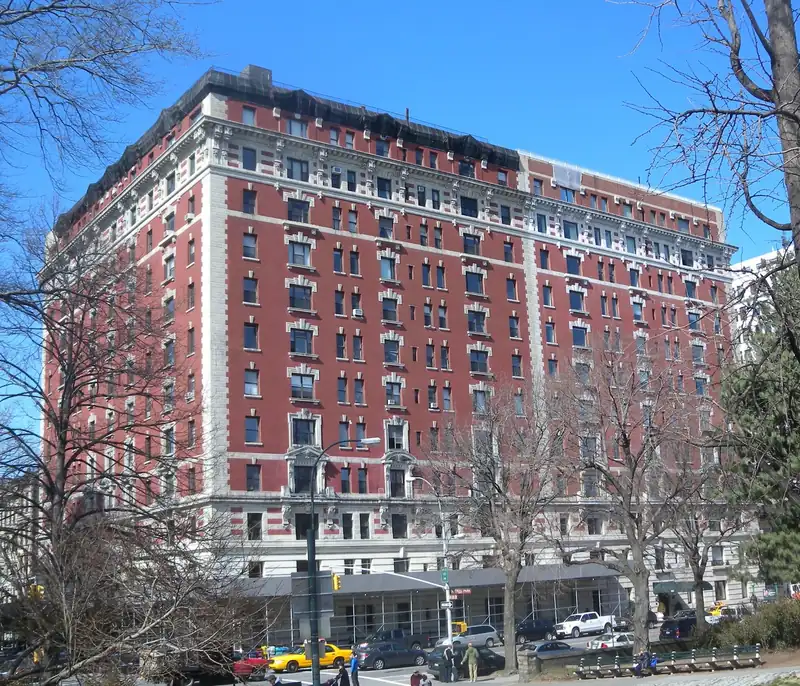
New York does not make the building's insurance automatic, so your own limits should follow what your documents actually say.
- The board insures only when documents require it
- Building premiums reach you through common charges
- Get the insurance section in writing
The board insures the building against fire and other required hazards only when the declaration, the by-laws or a majority of unit owners call for it1 (N.Y. Real Prop. Law § 339-bb1).
When it does, every owner must get written notice of that insurance and of any change or termination1. Building premiums are common expenses1, so you pay a share either way.
Read the insurance section of your declaration and by-laws before you pick a single limit.
Go deeper: the leasehold exception and where your unit begins
There is one exception: a qualified leasehold condominium, a narrow class tied to named state authorities, must always insure the building, at full replacement cost updated annually1.
The declaration sets what the board's policy covers and where your unit starts. Anything inside the unit that the documents leave to you is yours to insure.
Cannot find the insurance section? Ask the board or managing agent for it in writing, along with the master policy's declarations page or certificate.
Own co-op shares? Your lease draws the line
A co-op apartment is insured differently from a condo, and the proprietary lease is where your side of the line is written.
- Your shares come with a proprietary lease
- Insure belongings, improvements and liability
- Compare coverage parts, not form names
The co-op shares allocated to your apartment come with a proprietary lease, the long-term lease for that apartment2.
That lease and the corporation's other documents say what the building's insurance handles and what falls to you as a shareholder.
Go deeper: what a co-op unit-owner policy usually covers
Shareholders typically insure three things with a unit-owner policy: belongings, the improvements they paid for (kitchens, baths, floors) and personal liability, in the apartment and away from it.
Carriers label these forms in different ways. Line up the coverage parts side by side instead of trusting the form name, and check your policy.
Know the narrow window for a hurricane deductible
A state rule limits when your insurer can apply a hurricane deductible, and that changes what a storm claim pays you.
- Only after a New York landfall
- Wind damage only, inside a set window
- Your insurer must disclose its trigger
A hurricane deductible can apply only when the National Weather Service determines the hurricane made landfall in New York State3 (11 NYCRR 74.4(b)(1)-(2); 11 NYCRR 74.0(c)(3)3).
Read two deductibles, not one: yours on the HO-6 and the building's on the master policy. A storm that damages both can put both in play.
Go deeper: the exact timing and definition in the rule
- It covers wind damage only, from 12 hours before that landfall until 12 hours after the Weather Service cancels the last New York hurricane watch or warning for the storm3.
- A hurricane here means a tropical cyclone with sustained winds of 74 mph or higher, as the Weather Service determines3.
- An insurer may choose which hurricane category triggers its deductible, and it must disclose that choice in the policyholder notice3.
Turned down? See what NYPIUA can and cannot cover
New York's FAIR plan is a property-only fallback, so learn its limits before a decline pushes you there.
- No HO-6 on its list
- Optional unit-owner property coverages
- No liability or theft coverage
NYPIUA lists no HO-6 or other homeowners policy. It offers a Dwelling Fire policy with optional unit-owner property coverages: building items for condo owners, improvements for co-op owners, and loss assessment property coverage. It does not include liability or theft coverage4.
Go deeper: what that means if the plan is your only offer
Even if NYPIUA takes your unit after other companies turn you down, that policy protects only the property side. You would still be without personal liability coverage.
Ask the plan about eligibility, and have several companies compared before you settle for property-only protection.
A stalled claim has a state hotline behind it
If a claim drags or a decision looks wrong, New York's Department of Financial Services takes consumer calls.
- Ask the carrier to put its position in writing
- Keep policy and claim numbers handy
- Then call the DFS hotline
The DFS consumer hotline is (800) 342-3736, staffed Monday to Friday, 8:30 AM to 4:30 PM5.
Close five coverage gaps before a claim tests them
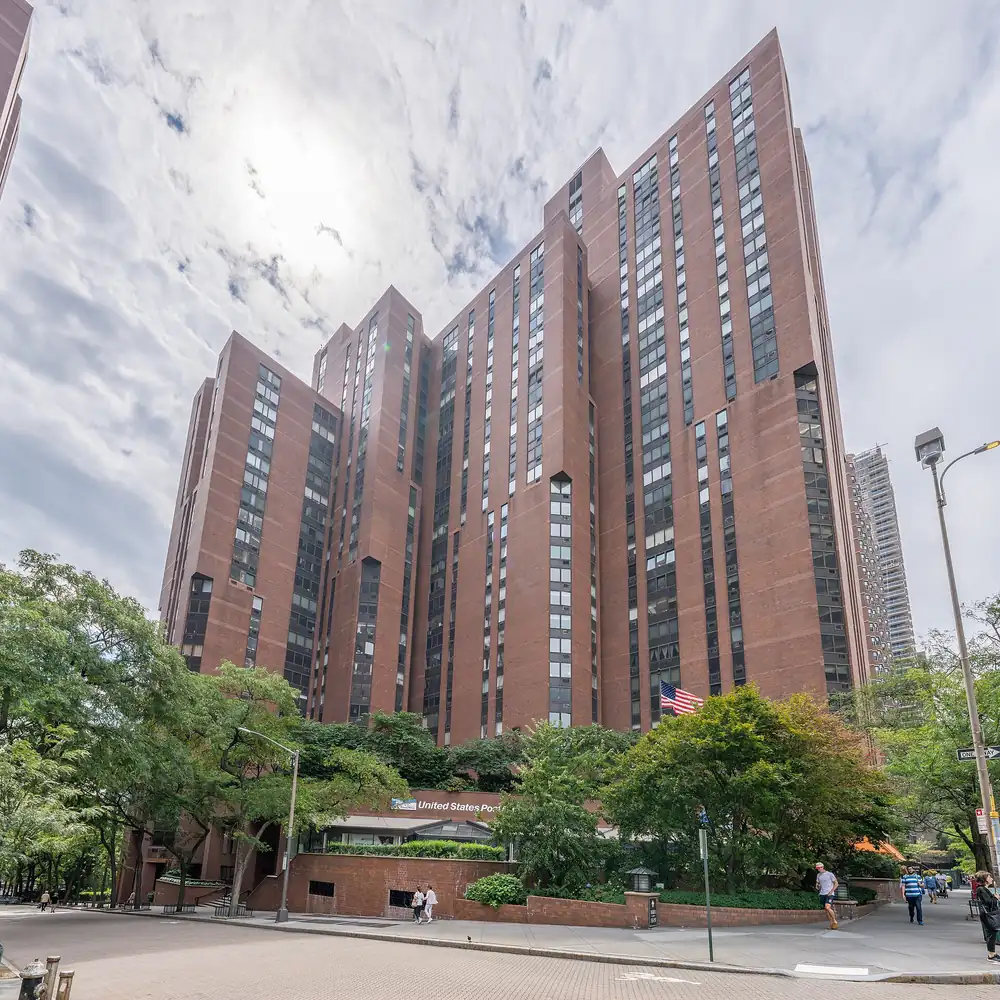
Each gap below can leave you paying out of pocket. Swipe through and hold each one up against your own policy.
- Leaks coming through the ceiling
- The building's deductible
- Assessments after a loss
Go deeper: liability, lender floors, reserves and loss assessment
When the leak starts in your unit
If water from your unit damages a neighbor's, your personal liability coverage may respond when you are legally responsible; check your policy. Our page on water damage from the unit above covers the order of claims.
Fannie Mae and your coverage floor
If your loan is sold to Fannie Mae, you need a unit owners policy whenever the master policy leaves part of the interior or your improvements uncovered, or carries a per-unit deductible6, and its limit has to reach the greater of what restores that uncovered interior or the per-unit deductible7.
Loss assessment coverage
When the association assesses every owner for a loss the whole community suffers, such as storm damage past the master policy limits, loss assessment coverage may help; if your own policy covers the cause, the assessment for it is covered too8. Our loss assessment coverage guide explains the limits.
Reserves and the next assessment
Reserve funding and inspection schedules shape how often owners face special assessments. Ask the board for the current budget, the reserve balance and any recent engineering or inspection report, and read what your by-laws say about reserves.
Vacancy and rental wording for your unit
Many unit-owner forms treat an empty or rented unit differently. Have someone check the unit while you are gone, and check your policy for vacancy and rental wording before the season starts.
Match each claim to the right coverage letter
Knowing which letter pays keeps you from underinsuring the upgrades built into your unit or the things you own.
- A: what is built into the unit
- C: what you could pack and move
- Built-in appliances usually sit in A
Built-in appliances, on the standard HO-6 form many carriers use, usually fall under Coverage A; check your policy9.
Weighing forms? See how the HO-6 differs from the HO-3.
See several companies side by side, then choose
One company's offer cannot tell you how another would treat your condo or co-op. A side-by-side comparison on identical limits can.
- Same limits across several companies
- Ask which discounts apply, if any
- A quote never binds coverage
An agent tied to a single company can only show you that company's policy. Lining several up on the same limits shows whether a different one views your apartment differently.
Plenty of owners have never had their walls-in amount, their loss assessment limit or their deductible choice reviewed at all. Ask each company about discounts or credits; availability varies by company and state, and the quote spells out any that apply.
Go deeper: how the comparison works from here
The agent compares your unit across several companies, matches the coverage to what your documents leave to you, and lays out the options. You decide.
A quote does not bind coverage, and nothing is in force until a policy is issued.
Four papers get your New York quote moving
With these in hand, the comparison starts from your building's real rules instead of guesses.
- Ask the board for anything you lack
- Any one of them is enough to start
- Co-op owners use the proprietary lease
- The declarations page from your current HO-6 or co-op policy, if you have one.
- The master policy certificate or summary, from the board or managing agent.
- The insurance sections of the declaration and by-laws, or of the proprietary lease.
- Upgrades you or an earlier owner paid for. The contents calculator totals belongings.
New York condo and co-op owners can request quotes here. Where the agent is licensed is set out in the agent disclosure.
New York condo and co-op insurance questions
Is condo insurance mandatory in New York?
The requirement usually comes from your by-laws or your lender, so read both before you assume you can skip it. A loan that follows Fannie Mae rules calls for a unit owners policy if the master policy leaves out any interior or improvements, or has a per-unit deductible6.
Do New York co-op shareholders need their own policy?
Check the proprietary lease and the house rules, because they may require one. Even where nothing is required, the building's policy is not written for your belongings, the improvements you paid for or your personal liability, so a policy of your own is what protects them.
Can a New York condo board bill a special assessment for insurance, and can I see the master policy?
When the board insures the building, it must give each owner written notice of the insurance and of any change or termination, and building premiums are common expenses1. Your by-laws govern how assessments are set, so ask for the policy or certificate in writing. Loss assessment coverage generally responds to assessments for covered losses, not to a premium increase.
If a New York condo building is destroyed, whose insurance rebuilds it?
The building's policy, if the board carries one; your declaration and by-laws say whether it must. A qualified leasehold condominium must insure the building at full replacement cost, updated annually1. Your own policy is where your belongings and improvements are insured, and loss assessment coverage may help with your share of an assessment for a covered cause.
Does a co-op or condo policy cover my belongings while I travel?
Personal property coverage on unit-owner forms generally follows your belongings away from home, often with lower limits for some kinds of items. Check your policy, and ask what those lower limits are, before you buy a second policy just for a trip.
How much coverage should I buy if the board sets no minimum?
Start with what your declaration or proprietary lease leaves to you, then add your belongings. With a Fannie Mae loan, the lender's floor applies: enough to restore the uncovered interior, or the master policy's per-unit deductible, whichever is greater7. Our guide to how much condo insurance to carry walks through it.
Before you renew, make one call.
A licensed agent compares several companies on the same limits. Asking changes nothing on your policy, and a quote never binds you.