
Your one stop for condo insurance.
Stop calling agent after agent for one quote each. One call, and a licensed agent shops your HO-6 with several insurance companies, A-rated options included, then lays the offers side by side. You pick.
You are in the right place. Keep reading for the answer, or call and let the shopping start now.
Leaks between stacked units
Condo Water Damage From the Unit Above
The licensed agent behind this site sees one pattern: when water comes through your ceiling, several policies often respond. The master policy handles what the association insures; your HO-6 handles your covered interior and belongings. The upstairs owner's liability coverage usually comes in only if that owner is legally responsible.
The master-policy deductible, and who gets billed for it, is where many disputes start.
- One call, not ten
- Several companies shopped for you
- No obligation: a quote never binds
Compare my condo quotes
Several companies, side by side. You decide.
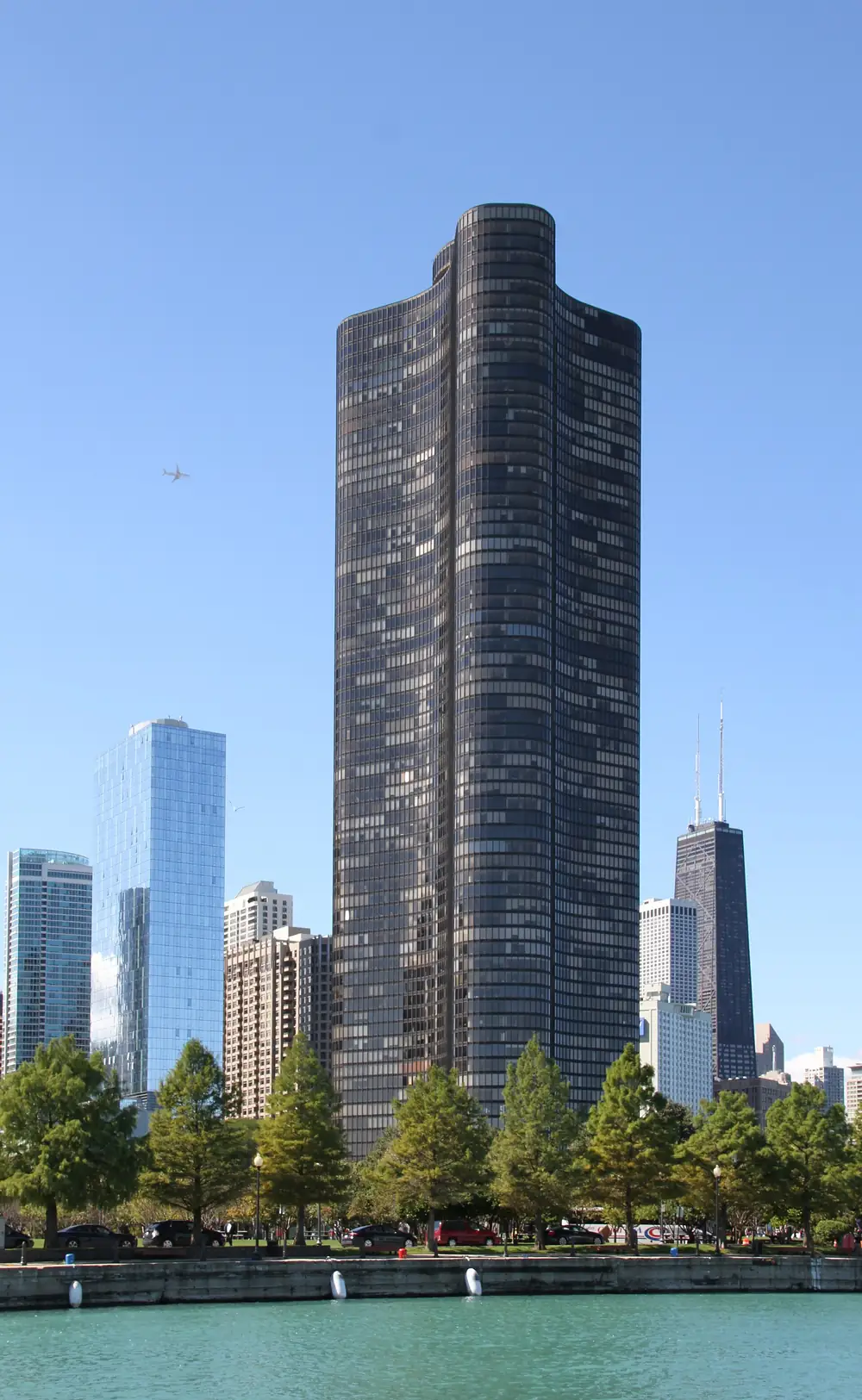
Aerial view north over Gold Coast lakefront high-rise residential buildings along Lake Shore Drive and Lake Michigan. Photo: Ken Lund from Reno, Nevada, USA, CC BY-SA 2.0, via Wikimedia Commons.
Condo Water Damage From the Unit Above: tap where it started
Pick the source and see which policy usually answers first, so you call the right people today.
- Your HO-6 usually covers your finishes and things
- The master policy covers what the association insures
- The neighbor's policy usually needs them at fault
A leak from upstairs lands on property with different owners: the building structure, the finishes inside your unit, and your belongings. Each is insured by whoever is responsible for it under the declaration and state law, and the claim usually splits the same way.
Do these things in the first hours after a leak
What you do early shapes what gets paid. This short list protects your unit and your claim at the same time.
- Stop the water first
- Document before you clean
- Tell the association and your insurer the same day
- Stop the water. Knock upstairs, call the manager or security, find the shutoff.
- Photograph and film the ceiling, walls, floors and damaged things before you move anything.
- Notify the association in writing, with the date and time.
- Call your own insurer the same day.
- Prevent more damage: move belongings, set out buckets, run fans.
- Keep receipts for mitigation, hotel stays and meals.
- Keep damaged items until the adjuster has seen them.
Go deeper: why each step matters to the claim
If water is near outlets or fixtures, stay clear and ask for the power to that area to be cut. Capture the source on camera if you can see it.
The association or manager needs to open the master policy claim and trace the source. Call your insurer even if you think the master policy or the neighbor will pay: late notice can hurt a claim.
Hire water mitigation if needed. Policies generally expect reasonable steps to protect the property, and receipts for anything you buy because of the leak support what you claim.
Know what the association's master policy repairs
The master policy repairs what the association insures, often including pipes in shared walls. The association usually files that claim.
- Common elements, often shared pipes
- Sometimes the structure or original finishes
- Its deductible applies first
The master policy covers what the association must insure. That usually includes the common elements, which in many buildings take in the pipes inside the walls between units, and in some buildings it extends to the unit's structure or original finishes.
In New Jersey, for example, the association must insure all common elements and all structural portions of the condominium property against fire and other casualty1.
Your HO-6 can cover your finishes, things and a place to stay
Your own policy usually picks up where the master policy stops, and can pay for a place to stay during repairs.
- Coverage A: upgraded floors and cabinets
- Coverage C: your belongings
- Coverage D: extra living costs
Coverage A pays for the permanently installed property that the association's policy does not reach2, such as upgraded flooring or cabinets. Coverage C responds when a covered loss ruins what you keep in the unit, the sofa, the clothes in the closet, the computer, the TV3.
If the unit is unlivable during repairs, Coverage D pays living expenses over your normal costs while you stay elsewhere4.
Go deeper: a sudden burst vs a slow seep
Many forms cover a sudden and accidental discharge of water, such as a burst pipe or a failed appliance hose.
Many exclude or limit damage from seepage that repeats over weeks or months. Check your policy before you assume a slow leak is covered.
Find out when the upstairs owner's policy may pay you
Their insurance usually pays you only if they are legally responsible. With no fault, each policy often pays its own part.
- Negligence is usually the trigger
- No fault often means no liability claim
- Some associations change that by rule
Legal responsibility usually means negligence: a tub left running, a washer hose they knew was cracked, a repair they skipped. Their Coverage E responds when they are found legally responsible for damage to someone else's property5, subject to their policy's terms. Your declaration may also shift responsibility between owners.
Go deeper: when a board makes the source unit pay regardless of fault
If nobody was careless, there is often no liability claim. Some associations change that by rule. In Illinois the board may require owners to carry insurance for damage to another unit that originates from their unit, regardless of negligence6.
Learn who gets the master deductible bill
Part or all of the master deductible can end up on one owner's bill. State law and the declaration decide whose.
- A board may bill the unit where it started
- Buyers may be warned in resale papers
- Loss assessment may help, depending on the form
Illinois master deductible options
The board picks among three routes: paying the deductible as a common expense, assessing it after notice and a hearing to the owners who caused the damage or where the loss originated, or requiring the owners of the affected units to pay it7. Illinois page.
Pennsylvania deductible levy
The executive board levies the uninsured deductible portion under the act's special allocation of expenses8. Pennsylvania page.
Virginia deductible statement
A buyer's resale certificate must carry a statement that the governing documents may make an owner responsible for some or all of a claim's deductible9. Virginia page.
Florida owner coverage items
Personal property and the listed interior items that serve only the unit, such as coverings, electrical fixtures, appliances, water heaters and built-in cabinets, are the owner's responsibility, and so is any insurance on them10. Florida page.
Go deeper: when your own policy can pick up the deductible
If the association passes its deductible to you, loss assessment on your HO-6 may help, depending on the form. See how loss assessment works, with a calculator for your share.
Use this leak to check your limits before the next one
After a leak, check Coverage A against your finishes and loss assessment against the master deductible.
- Walls-in limit against your finishes
- Loss assessment against the master deductible
- Water wording from several companies, side by side
If your policy came through someone who writes for one company, you have seen one company's water wording. The agent behind this site compares HO-6 forms and limits across multiple carriers, and you decide.
Quoting does not bind coverage, and your current policy stays as it is until you accept a new one.
Water damage from above: common questions
In a Chicago condo, who pays when a broken pipe in the unit above leaks into mine?
Often the association's policy and yours share it. In Illinois the association policy covers the units, including the bare walls, floors and ceilings unless the board decides otherwise11, and your HO-6 covers what lies past that line, such as finishes the declaration leaves to you, upgrades and belongings. The board then decides who pays the master deductible. See the Illinois page.
In Pennsylvania, who pays the master deductible after a leak from upstairs?
The executive board decides how it is charged. Pennsylvania's act has the board levy the uninsured deductible portion of a loss as a special allocation of expenses8, and the declaration can shape who is billed. Ask the board or manager how your association applies it, and ask your insurer whether loss assessment on your form would respond. See the Pennsylvania page.
In North Carolina, how does a leak divide between the association's policy and mine?
By what each policy insures. In North Carolina the association policy must include the units if reasonably available but need not include improvements and betterments owners installed12, so owner upgrades may fall to your HO-6. The declaration fills in the rest. See the North Carolina page.
What if nobody knows where the water leak is coming from?
Report it to the manager or association in writing and ask them to trace the source; access to other units and the pipes in the walls usually runs through them. Open a claim with your own insurer at the same time. In Illinois, charging the deductible to the owner where a loss started requires notice and a hearing7, so the source matters. See the Illinois page.
Does my HO-6 cover water damage from the unit above if the master policy also pays?
Usually, for the parts the master policy does not cover: often your belongings, your upgrades and extra living costs. The two policies work on different property, so one paying does not cancel the other. Check your policy for how it treats water that seeped over time.
Before you renew, make one call.
A licensed agent compares several companies on the same limits. Asking changes nothing on your policy, and a quote never binds you.