Your one stop for condo insurance.
Stop calling agent after agent for one quote each. One call, and a licensed agent shops your HO-6 with several insurance companies, A-rated options included, then lays the offers side by side. You pick.
You are in the right place. Keep reading for the answer, or call and let the shopping start now.
Condo and co-op unit owners
HO-6 Insurance
The licensed insurance agent behind this site helps condo and co-op owners buy a unit-owner policy sized to the gap the master policy leaves, then compares it across several companies so you can decide.
In short: the association's master policy usually insures the building. Your HO-6 insures the part of the unit your documents hand you, your belongings, your liability and, on many forms, a place to stay after a covered loss.
- One call, not ten
- Several companies shopped for you
- No obligation: a quote never binds
Compare my condo quotes
Several companies, side by side. You decide.
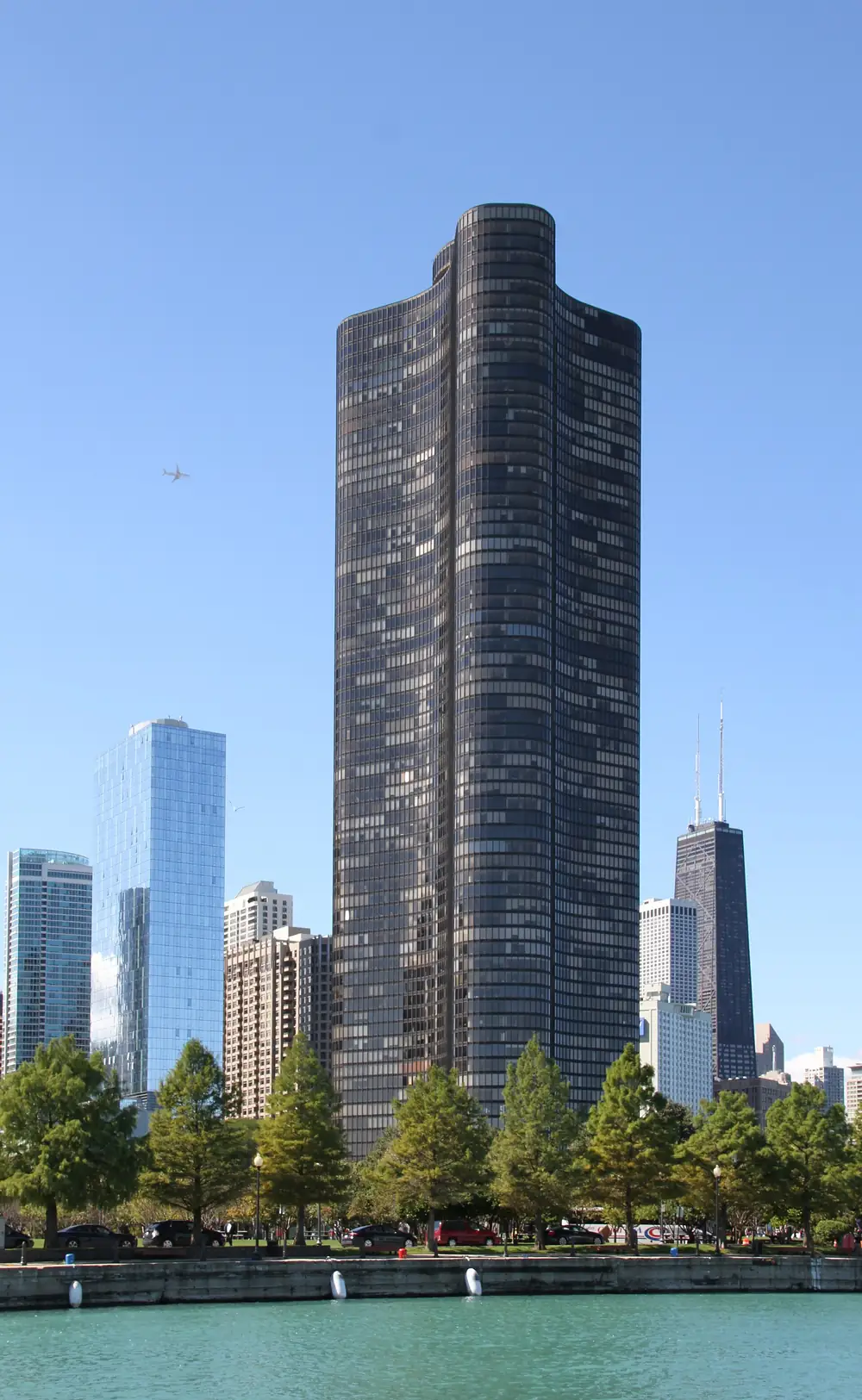
Lake Point Tower, a lakefront residential condominium high-rise near Navy Pier, Chicago. Photo: Tony Hisgett from Birmingham, UK, CC BY 2.0, via Wikimedia Commons.
HO-6 Insurance: covering what the master policy leaves you
One condo, two policies. Find where the association's stops and you know what yours has to pick up.
- The master policy usually covers the shared building
- Your HO-6 covers the layer your documents assign
- States draw that line differently
The association buys a master policy for the shared structure, usually paid for out of everyone's dues. You buy a unit-owner policy for whatever the governing documents leave to you.
Coverage the association already carries is not yours to buy twice. Coverage the documents put on you is.
Go deeper: how three states draw the association line
Where the line sits is set by state law and by your declaration. New Jersey's condo act has the association carry fire and extended coverage insurance on all common elements and all structural portions of the property1 (see New Jersey).
For an ordinary New York condominium, the board insures the building only when the declaration, the bylaws or a majority of owners require it2 (see New York). That is why the documents come before the quote.
Where the association line falls in a state that lists it
Florida writes a list into its statute. The association's coverage there must exclude personal property in the unit, plus floor, wall and ceiling coverings, electrical fixtures, appliances, water heaters, water filters, built-in cabinets and countertops, and window treatments that sit inside the unit and serve only it3; those items are the owner's to insure (see Florida). In many other places more of the detail sits in the declaration, so read yours.
See what each part of your policy pays for, in one tap
Every coverage letter answers a different what-if, from a burst pipe to a guest who slips in your kitchen.
- A: what is built into your unit
- C: everything you own inside
- D, E, F: a place to stay, lawsuits, guest injuries
These plain-language meanings paraphrase New Jersey's regulatory summary of the condo unit-owner form. They are not a rule in every state, and your own policy's wording controls.
Go deeper: the fine print on each coverage letter
Coverage A: the part of the unit you insure
Under Coverage A, the policy insures property permanently installed in the unit, to the extent the association's policy does not already reach it4. Think flooring, cabinets, fixtures and any upgrade you or an earlier owner made. On the standard HO-6 form that many carriers use, built-in appliances usually count under Coverage A; check your policy9.
A state can set a minimum. Virginia's homeowners insurance rules have insurers provide at least a $5,000 limit on a condo unit for the dwelling and fixtures the owner is responsible for10 (see Virginia). Treat any minimum as a starting line; size yours with how much condo insurance you need.
Coverage C: how personal property is settled
Ask whether yours settles at replacement cost (what a new item costs) or actual cash value (replacement cost less wear). Many replacement cost forms pay the depreciated amount until you actually replace the item. Build a room-by-room list with the condo contents calculator.
Coverage D: how long loss of use lasts
The limit and how long it lasts differ by form, so read your declarations page.
Coverage E and F: liability inside your unit
The association's liability policy is written mainly for the association. When a guest trips inside your unit, that claim is usually aimed at you, which is where these two parts come in.
Your master policy type sets how much walls-in coverage you need

Bare walls, all-in, or something between: that one label can move your Coverage A limit a long way.
- Ask the manager which type your building has
- Get the certificate or summary in writing
- Count upgrades a past owner made
Many owners never had this label checked against their limit. It takes one email to the association's manager.
Go deeper: what the three labels usually mean
All-in usually means the association covers interior finishes and fixtures, often including owner improvements. All-in excluding improvements (sometimes called single entity) covers the original finishes but not later upgrades. Bare walls covers the structure and leaves interior finishes to owners.
People use these labels loosely. The label is shorthand; the policy and the declaration control.
State law sets the starting point. An Illinois association's property policy has to insure the common elements and the units, bare walls, floors and ceilings included unless the board decides otherwise11 (see Illinois); ask for the board's decision in writing. In Pennsylvania, the required association policy insures the units but leaves out improvements and betterments installed in them12 (see Pennsylvania).
Upgrades a prior unit owner made
When the master policy leaves out improvements, it may leave out the ones an earlier owner installed as well as yours. Assume you inherit a previous owner's tile, cabinets or built-ins, confirm it against the declaration, and count them when you set Coverage A.
Water that starts in another condo unit
A leak from upstairs can touch both policies and both deductibles. The water damage from the unit above guide walks through who pays what.
Cover your share when a building loss outruns the master policy
When a covered loss to shared property outruns the master policy, owners can get a bill. This line can pay toward yours.
- Covers certain special assessments
- The cause must be one your policy covers
- Included on some forms, optional on others
Loss assessment coverage may help with a special assessment, for example after wind damage to several roofs exceeds the master policy limits, and when the cause is covered under your own policy, the assessment for that cause is covered as well13.
Find the line on your declarations page. The loss assessment guide has the limits, the exclusions and a calculator.
Go deeper: one state that builds it into the policy
Florida makes it part of the policy by statute: a Florida unit-owner policy must carry at least $2,000 of it for all assessments from the same direct loss, if the loss is a type the policy covers14. Elsewhere it may be included or optional.
Have a mortgage? Your lender may set the minimum for you
Many condo loans spell out when you need a unit-owner policy and how big it must be. Know the rule before closing.
- Required when the master policy leaves gaps
- A per-unit master deductible also triggers it
- Get your lender's rule in writing
For a loan under Fannie Mae's guide, the borrower needs a unit owners policy if the master policy skips any piece of the unit interior or its improvements, or applies a per-unit deductible15 (Fannie Mae Selling Guide B7-3-0415).
Go deeper: how much coverage the guide asks for
The guide's minimum is whichever is greater: the amount needed to put the uncovered interior and improvements back as they were before the loss, or the master policy's per-unit deductible16.
The guide talks about the unit interior and improvements rather than walls-in coverage. Other loan programs set their own terms.
Townhouse with an HOA? Your documents, not the look, pick the form
A townhouse is a building style, not a form of ownership. Title, and who must insure the structure, decide the form.
- Read the declaration or deed and covenants
- Check the association's insurance summary
- Mixed setups need a closer read
Townhouse owned as a condominium
If the declaration makes your townhouse a condominium unit and the association insures the structure, you are in HO-6 territory, with Coverage A sized to what the documents leave you.
Fee-simple townhouse
If you own the building and the land under it and must insure the structure, a whole-house form such as the HO-3 is often the fit, HOA dues or not. Ask each company how it writes townhouses.
Mixed townhouse setups
Some documents split the structure between owner and association, or make a condominium owner insure the whole building. Have a licensed agent read the declaration and master policy first.
Compare the two forms line by line in the condo form versus the house form.
Co-op owners: your lease shows what is left to insure

You hold shares, not a deed to the unit, yet the same unit-owner approach fills your gap.
- Read the proprietary lease
- Get the co-op's building policy summary
- Insure what those two leave to you
A co-op owner holds shares in the corporation and a proprietary lease, the long-term lease on the apartment that comes with those shares17.
The co-op's building policy and your lease together show what is left for you. Ask the managing agent for both, then size your coverage to the gap.
Get your unit-owner policy compared on the same limits
The agent starts with your master policy, sizes Coverage A and C, then asks several companies to quote those exact numbers.
- You see the options side by side
- Ask each company about discounts and credits
- A quote binds nothing
If you bought your policy from someone who sells one company's coverage, you have one company's view of your unit. Several quotes on matching limits show you whether another company treats it differently.
Discounts and credits vary by company. Ask each one which apply to your unit; availability varies.
Getting a quote binds nothing; coverage starts only once you accept a policy and it is issued. Have these ready:
- Your current declarations page, if you have one
- The association's master policy summary or certificate
- The bylaws or declaration section on insurance
- Any improvements you or earlier owners added
Prefer writing? Send a quote request.
HO-6 questions unit owners ask
What is an HO-6 policy?
It is the homeowners form written for a condo unit owner. It insures the part of the unit the association does not, your personal property and your liability, and many forms add loss of use. The association's master policy usually insures the building itself.
What does an HO-6 cover that the master policy does not?
Whatever your declaration makes your responsibility: often flooring, cabinets, fixtures and upgrades, plus everything you own and your personal liability. The master policy type (bare walls, all-in or something between) moves that line, so read the association's summary first.
Do I need an HO-6 for a townhouse with an HOA?
It depends on how you own it. A condominium townhouse whose association insures the structure is usually an HO-6 case. If you own the townhouse and its lot outright and must insure the building, you likely need a whole-house form instead. The declaration and the master policy decide.
Does an HO-6 cover built-in appliances?
Usually yes: built-in appliances usually count as part of the unit under Coverage A on the standard HO-6 form many carriers use9. Freestanding items you would take with you when you move are usually personal property under Coverage C. Forms differ, so check yours before you set your limits.
Is an HO-6 required?
A mortgage lender or the association's documents are what usually make it required. Illinois, for example, lets a board require owners, under the declaration, bylaws or a rule, to insure their personal liability and damage their unit causes to another unit18 (see Illinois). Check your mortgage terms and your bylaws.
Can a co-op owner buy a unit-owner policy?
Yes. A co-op owner holds shares and the proprietary lease, which is the long-term lease for the apartment tied to those shares17. The co-op's building policy and the lease together show what is left for you to insure, so ask the managing agent for both.
Before you renew, make one call.
A licensed agent compares several companies on the same limits. Asking changes nothing on your policy, and a quote never binds you.