Your one stop for condo insurance.
Stop calling agent after agent for one quote each. One call, and a licensed agent shops your HO-6 with several insurance companies, A-rated options included, then lays the offers side by side. You pick.
You are in the right place. Keep reading for the answer, or call and let the shopping start now.
Chicago condo unit owners
Condo Insurance Chicago
The licensed agent behind this site compares HO-6 quotes from several companies for Chicago condo owners, and the answer to what you need begins with your building: Illinois requires the association's policy to insure the common elements and the units, bare walls, floors and ceilings included unless the board decides otherwise1.
Your HO-6 carries what sits past that line, your belongings, your liability and any share of the master deductible your board sends to you. In Cook County, wind and hail make that deductible worth knowing.
- One call, not ten
- Several companies shopped for you
- No obligation: a quote never binds
Compare my condo quotes
Several companies, side by side. You decide.
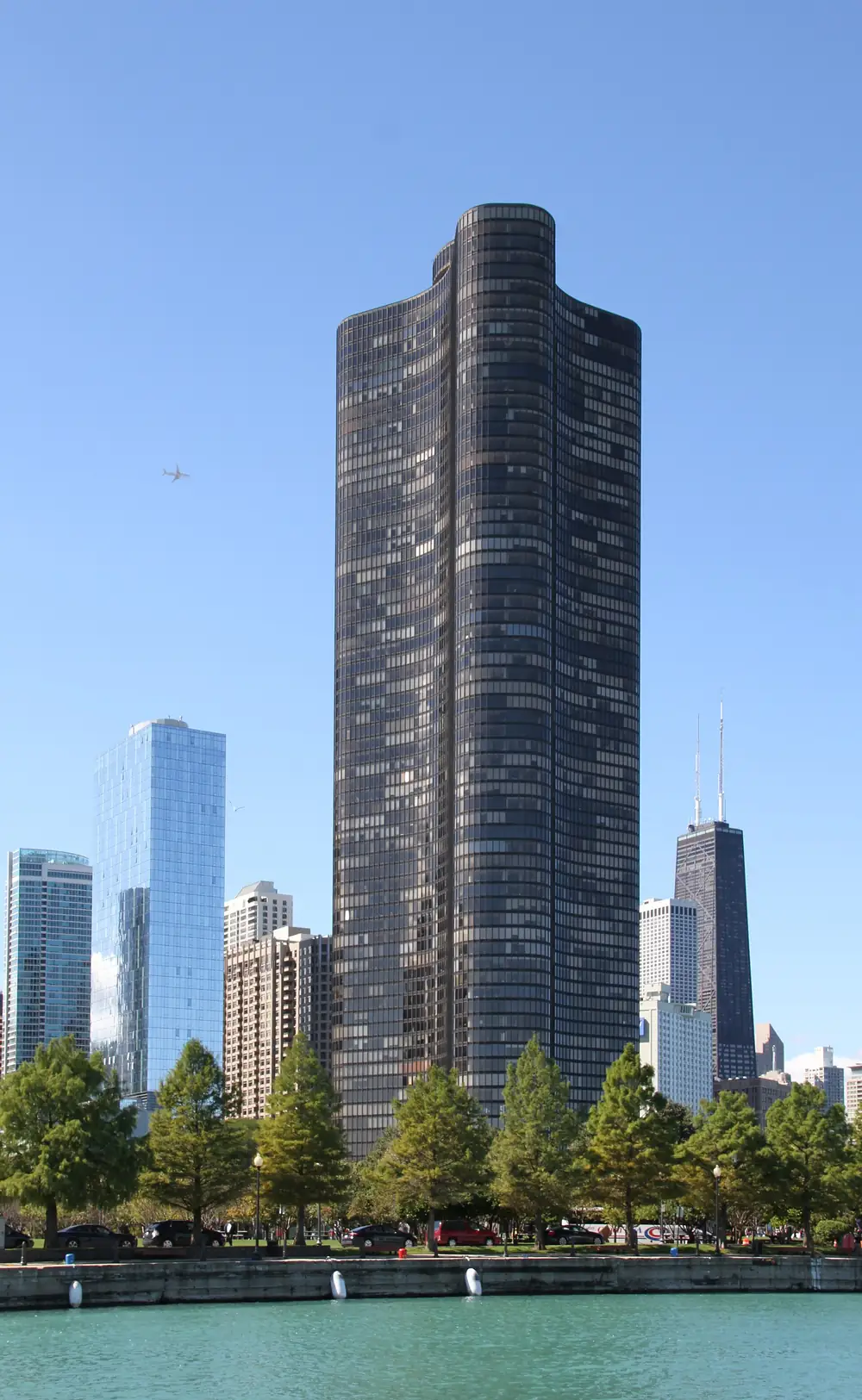
Lake Point Tower, a lakefront residential condominium high-rise near Navy Pier, Chicago. Photo: Tony Hisgett from Birmingham, UK, CC BY 2.0, via Wikimedia Commons.
Cook County's storm log, read for a Chicago condo owner
Federal storm records show how often wind, hail and winter weather were logged for the county. For you, the stake is the building's deductible.
- Wind and hail hit the roof and windows first
- Those parts sit on the master policy
- Your board decides who pays its deductible
Winter Storm and High Wind rows are logged for each forecast zone an event touches, so one event can show up as several rows. Thunderstorm Wind, Hail and Tornado rows are logged for the county as a whole.
A hailstone or a gust reaches the roof, the windows and the outer walls before it reaches your floors. In a condo those parts belong to the building, so the claim usually runs through the master policy, and the board chooses who pays that policy's deductible7 (765 ILCS 605/12(c)7).
Go deeper: what the storm log can and cannot tell you
The database lists events that were reported. It does not measure damage to any building in Chicago and says nothing about seasons to come. The figures cover Cook County as the reporting area.
Inside the unit. Rain driven through a broken window can ruin flooring, drywall finishes and furniture. Your HO-6 answers for what the master policy leaves to you, subject to its water and wind wording, so check your policy.
Your own deductible. Some HO-6 forms carry a separate deductible for wind or hail. Look for it on your declarations page before a storm, not after.
Towers and older low-rises: what Chicago's housing means for you
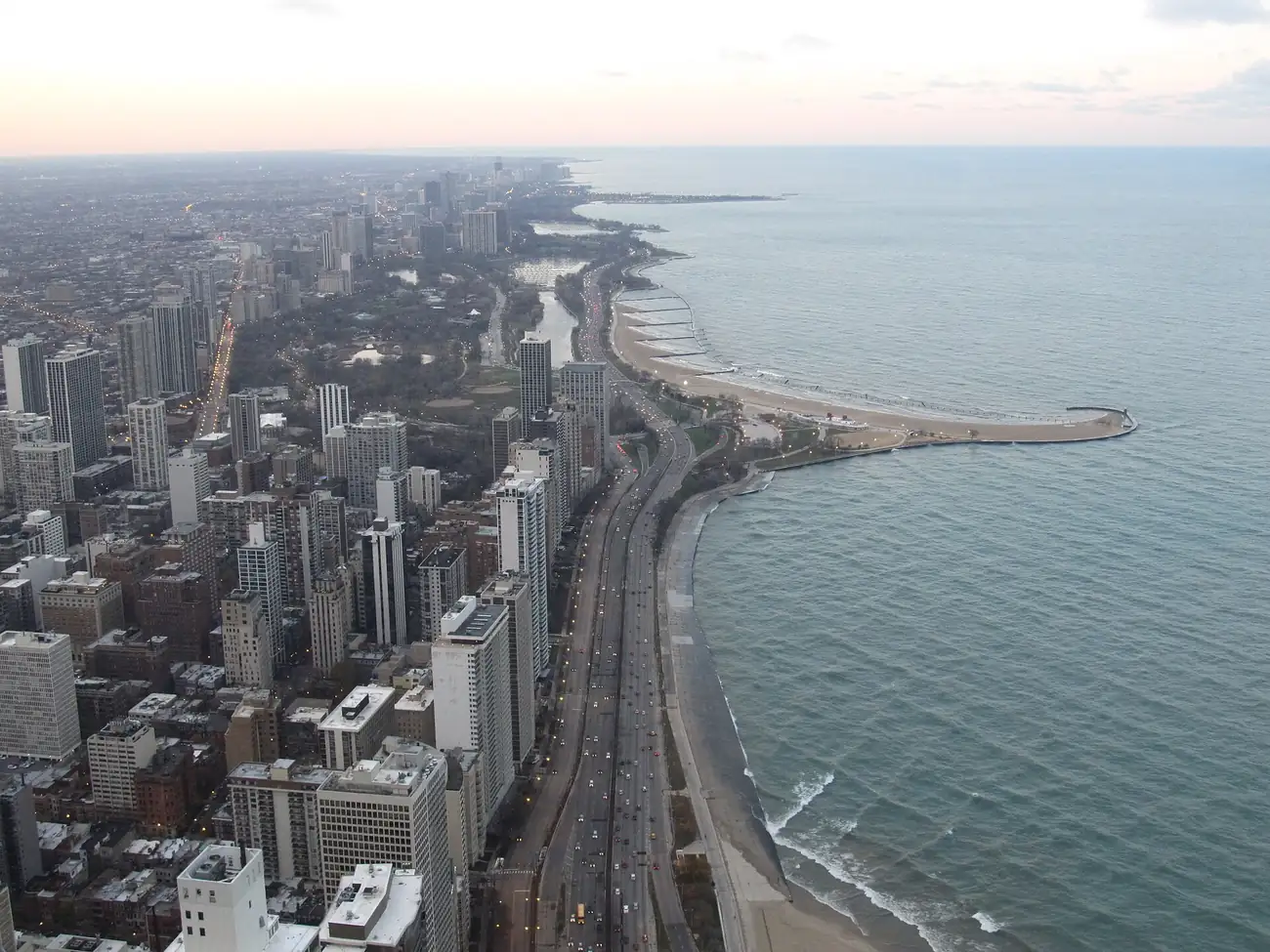
Chicago condos run from lakefront towers to older low-rise buildings. Each shape changes what your HO-6 has to do.
- Tall buildings stack many owners under one policy
- Older buildings bring aging pipes and repairs
- Your building's own year matters more than any median
Census estimates place 27.0 percent of the city's housing units in buildings of 20 or more units (ACS 2020-2024)8. Across Cook County, that share is 20.1 percent9.
The median year built for housing in Chicago is 195310, and for Cook County it is 196111. Half the stock is newer and half is older, so look up your own building.
In a tower, one master policy and one declaration set the split for every owner. The board's choice on bare walls tells you where your Coverage A starts.
Go deeper: how tall and older buildings shape a Chicago HO-6
The Census count behind the city share is about 344,544 units in buildings of 20 or more units12. Another 4.6 percent of the city's units sit in buildings of 10 to 19 units13.
High-rise condo: one master policy, many stacked units
- The split is set once. The declaration and the board's insurance decisions apply to every unit, so read them before you set limits. The master policy guide explains the common types.
- Water travels. A riser or a supply line can soak several floors. See water damage from the unit above for how those claims divide.
- Big buildings, big deductibles. A large master deductible split by percentage or charged to one unit can reach you through assessment.
Vintage condo buildings: repairs and separate assessments
- Aging systems. Old pipes, roofs and masonry are upkeep. When the board pays for them outside the budget, the bill can arrive as a separate assessment.
- Upkeep is not a loss. Loss assessment coverage answers a covered loss to shared property, not a repair plan. The special assessment guide sorts the two.
- Smaller associations. A building with a handful of units still needs a master policy that meets the Illinois rules below.
Find where your Chicago building's policy stops
Illinois sets what the association must insure, then lets the board move one line. That line decides how much Coverage A you need.
- Units and common elements: the association's policy
- Bare walls: on it unless the board opts out
- A board rule can require your own coverage
The Condominium Property Act treats your unit as the part of the property meant for your independent use, and calls every other portion a common element14 (765 ILCS 605/214).
An association policy cannot be issued or renewed without property coverage on the common elements and the units on special form causes of loss, written to full insurable replacement cost less deductibles1 (765 ILCS 605/12(a)(1)1).
Ask the board, in writing, whether it opted out of the bare walls, floors and ceilings. If it did, size Coverage A for them plus every finish and upgrade.
Go deeper: when your board requires you to carry HO-6 liability
A board can require each owner, through the declaration and bylaws or by rule, to insure personal liability and compensatory damage to another unit, whether the owner or a guest was careless or the damage simply began in the owner's unit15 (765 ILCS 605/12(h)15).
Under such a rule, that liability reaches the damaged neighbor's deductible, damage their insurance leaves unpaid, and their decorating, wall and floor coverings, trim, appliances and furnishings15.
In a stacked building, that rule turns a leak into a question about your liability limit. Ask whether your building has one, then check that your HO-6 liability is written to meet it. The Illinois condo insurance page covers the rest of the statute.
Run your share of a master deductible before the board bills it
The board picks one of three routes for the master deductible. Knowing yours tells you how much loss assessment coverage to carry.
- Shared by everyone as a common expense
- Charged to the owners linked to the loss
- Paid by the owners of the damaged units
On a claim for damage to a unit or the common elements, the board may fund the deductible as a common expense, bill it after notice and a chance for a hearing to the owners who caused the damage or whose units the loss came from, or have the affected units' owners pay it7 (765 ILCS 605/12(c)7).
When it is a common expense, your slice follows the declaration: each owner pays common expenses in the same ratio as the percentage of ownership in the common elements the declaration assigns16 (765 ILCS 605/9(a)16).
Loss assessment calculator
Math only. Enter the association's master-policy deductible and your share of the association (from the declaration). The result is what your share of that deductible would be, compared with the loss assessment limit you carry.
Whether your loss assessment coverage pays an assessment for the association's deductible depends on your policy form. Ask before you rely on it.
Go deeper: when the whole deductible can land on one Chicago unit
The calculator assumes a split by percentage. The other two routes can put the full deductible on one owner, such as the unit where a leak started. Run the full amount too.
Whether loss assessment coverage pays toward a deductible charged to you depends on your form. Ask each company for the answer in writing. The loss assessment coverage guide covers how the limit works.
Separate assessments: when Chicago owners get a vote
Some bills outside the budget can go to an owner vote and some cannot. Know which kind you are holding before you pay or protest.
- Read the meeting notice when it arrives
- Ask whether an owner vote applies
- Ask what reason the board gave
Outside emergencies and legally required costs, a separate assessment that lifts the yearly total past 115% of last year's can be put to an owners' meeting by a petition from 20% of the votes within 21 days, and the board meeting that adopts it must be noticed17 (765 ILCS 605/18(a)(8)17).
An emergency or a cost the law requires can be separately assessed without owner approval or a petition, while additions and alterations to the common elements outside the budget need approval from two-thirds of all owners' votes18 (765 ILCS 605/18(a)(8)(iv)-(vi)18).
Go deeper: which separate assessments your HO-6 can answer
Illinois also lets a separate assessment be paid over more than one fiscal year18, so ask the board about the schedule.
- A covered loss. Hail or wind damage the master policy did not fully pay, assessed to owners, may draw on your loss assessment coverage if your form covers that cause.
- Upkeep or a project. Tuckpointing, a new roof at the end of its life or a lobby upgrade is not a loss. Your HO-6 generally stays out of it.
The condo special assessment guide walks through the rest.
Turned down for HO-6 insurance in Chicago? Know the fallback
Illinois has a residual market that writes unit-owner policies. It pays differently, so learn the terms before you rely on it.
- The FAIR Plan lists an HO-6 form
- Actual cash value, not replacement cost
- Named perils only
HO-6 Unit Owners appears on the FAIR Plan's list of homeowners policies, and the plan's own summary for producers calls its condo form actual cash value coverage against broad named perils19.
Actual cash value takes depreciation off what a claim pays. A named perils form covers only the causes it lists, so read that list against the water and wind risks in your building.
Go deeper: using the FAIR Plan as a bridge
The FAIR Plan policy is for your unit. The association's master policy is a separate purchase the board makes for the building.
If your unit lands there, ask to be requoted in the standard market at each renewal, where replacement cost and broader forms are often available by endorsement.
Get the building's records before you set limits
Your right to see the association's policies, plus the county's parcel records, let you build your HO-6 on facts instead of guesses.
- Ask for the current master policy in writing
- Check parcel details with the Assessor
- Read what the waiver of subrogation does
The board has to keep every current insurance policy of the association, and you may inspect and copy them by sending a written request that names the records; no answer within 10 business days counts as a refusal20 (765 ILCS 605/1920).
The Cook County Assessor's Office21 values property across the county. Its address search22 pulls up the parcel record for your building.
Go deeper: the waiver of subrogation, in plain words
The association's insurer must give up any right to recover what it pays from unit owners, their households, the association or board members, and owners give up claims under that policy against the association and the board23 (765 ILCS 605/12(e)23).
In plain terms, if a fire starts in your kitchen and the master policy pays to rebuild, its insurer generally cannot turn around and sue you to get that money back. The deductible is a separate matter that follows the board's route above.
Records to request from your Chicago association
- The current master policy, with its deductibles and causes of loss.
- Any board decision on bare walls, floors and ceilings.
- Any rule that requires owners to carry liability coverage.
- Your percentage of ownership from the declaration.
Compare Chicago condo insurance quotes on the same limits
One company's quote shows one company's answer. Several side by side, built on your building's rules, show where they differ.
- Same Coverage A, liability and loss assessment
- Ask which discounts or credits apply
- A quote binds nothing; you decide
Condo owners in Chicago and elsewhere in Cook County can request quotes compared through this site by a licensed insurance agent.
Each option is set to the same Coverage A, liability limit, loss assessment limit and deductible, so the differences you see are real ones. Ask each company which discounts or credits apply to your unit.
Requesting a quote does not bind coverage. A policy starts only when it is issued. Start a comparison.
Go deeper: what to have ready for an Illinois HO-6 comparison
- Your current declarations page.
- The master policy certificate or summary from the manager.
- The board's bare walls decision and any owner coverage rule.
- A list of upgrades, such as flooring, cabinets and fixtures.
The HO-6 insurance guide explains each coverage part, and the Illinois page covers the statewide rules.
Chicago condo owner questions
Is HO-6 insurance required for a Chicago condo?
Your board may require one: the declaration, bylaws or a board rule can make owners insure liability for damage to another unit15. A mortgage lender usually requires a unit policy too. Even without either, the master policy is not written for your belongings or upgrades.
How much is condo insurance in Chicago?
It depends on your unit and your building, not a citywide figure. Companies weigh your Coverage A (larger if the board opted out of bare walls), contents, liability and loss assessment limits, your deductible, the building's age and construction, and your claims history. Comparing several companies on the same limits shows how each prices your unit.
Wind-driven rain came through my Chicago high-rise and ruined my hardwood floor. Must I claim on my own HO-6?
Not automatically. The association's policy covers the units on special form causes of loss, including the bare floor unless the board opted out1. Hardwood laid on top may be yours under Coverage A. Ask for the master policy in writing, report the loss to both insurers, and let the wording settle it.
My upstairs Chicago neighbor keeps leaking into my condo, and their insurer offers only my deductible. What can I do?
Ask the board whether it requires owners to carry liability for damage to other units. If it does, that liability takes in your deductible, damage your insurance leaves unpaid, and your coverings, trim, appliances and furnishings15. Send the rule to their insurer and claim the rest on your HO-6.
What must condominium association insurance in Chicago include to satisfy a buyer's lender?
Illinois already requires a master policy written to full insurable replacement cost less deductibles1. For a Fannie Mae loan, the policy must cover at least 100% of the estimated replacement cost of the project improvements24. If the certificate shows only a limit, ask the association's agent for one that states the valuation basis.
Our small, older Chicago condo building was nonrenewed. Where does the association find master coverage?
The board should have the building marketed to several companies well before the expiration date, with photos, updates to roof, wiring and plumbing, and loss history ready. Whatever it buys must still meet the Illinois rules for association policies. Owners can ask to see the new policy once it is in force 765 ILCS 605/1920.
Should a Chicago townhouse owner carry an HO-6 or an HO-3?
It depends on the legal form. Illinois says a common interest community, real estate other than a condominium or co-op whose owners pay for shared areas an association runs, can include townhomes25, and there you may insure the structure yourself. If your townhomes are a condominium, the association's policy must include the units1, so an HO-6 usually fits. See the townhouse insurance guide.
Before you renew, make one call.
A licensed agent compares several companies on the same limits. Asking changes nothing on your policy, and a quote never binds you.