Your one stop for condo insurance.
Stop calling agent after agent for one quote each. One call, and a licensed agent shops your HO-6 with several insurance companies, A-rated options included, then lays the offers side by side. You pick.
You are in the right place. Keep reading for the answer, or call and let the shopping start now.
New York co-op shareholders
Co-op Insurance New York
The licensed agent behind this site gives co-op shareholders one answer: next to the corporation's building policy, you need a policy of your own for the improvements you paid for, your belongings and your personal liability. Loss assessment coverage, for your share of a bill after a covered loss, completes it.
Your proprietary lease and the building policy decide how much of each. Here is how to read both, what lenders look for and how to compare quotes.
- One call, not ten
- Several companies shopped for you
- No obligation: a quote never binds
Compare my condo quotes
Several companies, side by side. You decide.
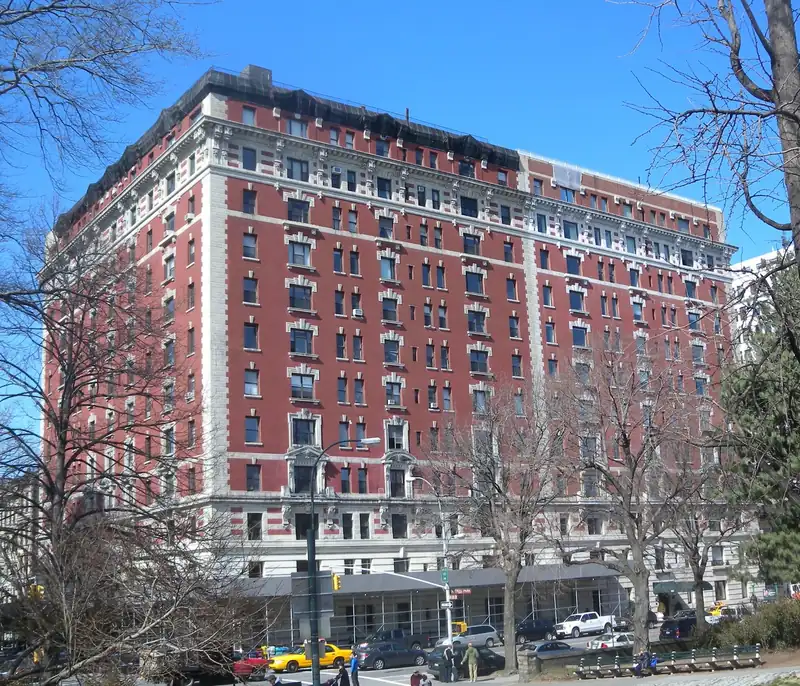
Pre-war apartment buildings at 251 and 257 Central Park West, Upper West Side, Manhattan. Photo: Jim.henderson, CC0, via Wikimedia Commons.
Co op insurance New York starts with what you own
You hold shares and a lease, not a deed, so your own policy covers a different slice than a condo owner's does.
- The corporation owns the building
- Your shares come with a proprietary lease
- The lease marks where your risk begins
New York's Attorney General explains that a co-op owner is a shareholder in and a tenant of one and the same corporation, run by a board the shareholders elect1.
The shares allocated to your apartment carry a long-term proprietary lease for it2. Treat that lease as your coverage map: it, not a deed, says which parts of the apartment are yours to repair and insure.
Go deeper: why corporate ownership shapes your policy
New York City's housing preservation agency calls co-ops their own form of ownership, distinct from a condo, a house or a rental: owners are shareholders because they bought shares in a corporation that owns the real property3.
Because the corporation holds the building, its policy is the one written on the structure. Yours is written around it, for the pieces the corporation does not insure for you.
When a sponsor converts a building to a co-op, the offering plan has to explain that the corporation, as owner of the entire building, is taxed on it and may mortgage all of it, so shareholders rely on each other for those payments, and that every shareholder signs a proprietary lease4 (13 NYCRR 18.3(e)(6)(ii)-(iii)4); that is a disclosure rule for the sponsor's plan, not a standing duty on every co-op.
For the state's condo rules and other New York details, see the New York condo insurance page.
Co-op insurance NYC: what the building policy leaves you
The corporation insures the structure. Whatever its policy and your lease leave out belongs on your own policy.
- Building policy: structure and shared spaces
- Your policy: upgrades, belongings, liability
- Get both documents before you quote
New Mexico's insurance regulator, in a guide for condo and co-op owners, says to read the building's policy first: in most cases it should cover common areas such as halls, the roof, the basement, the elevator and the boiler, sometimes standard fixtures in each unit, and sometimes only bare walls5.
Co-op building policy
Written for the corporation: the structure, shared spaces and the corporation's own liability.
Improvements and betterments
Kitchens, baths, floors and built-ins paid for by you or an earlier shareholder, when the building policy stops short of them.
Contents
Furniture, clothes, electronics: anything you could box up and move.
Personal liability
An injured guest, or water from your apartment harming a neighbor's, when you are legally responsible.
Go deeper: how lenders expect the building policy to be set up
For a co-op project, Fannie Mae requires a master property policy on the common elements and residential structures unless the co-op's legal documents require each unit to carry its own property policy, with the corporation paying the premium as a common expense6.
Fannie Mae also requires that building policy to name the co-op corporation as the named insured7. Shareholders are not the named insured on the building's policy, which is why a separate policy of your own matters.
The Attorney General calls the state's Business Corporation Law the main law on how most co-ops operate, and points shareholders to the co-op's own by-laws, proprietary lease, certificate of incorporation and house rules8. Ask the managing agent for the insurance articles in those papers. Condo owners know the building's policy as a master insurance policy; it works much the same way.
Your offering plan may already name what to insure
If your building came with an offering plan, its insurance pages may list the risks shareholders were told to cover themselves.
- A disclosure rule for sponsors' plans
- Contents, upgrades and liability are flagged
- The lease summary covers repairs
Under the Attorney General's rules, a co-op offering plan must tell shareholders it is wise to buy their own insurance for fire and casualty losses to contents, additions, upgraded fixtures and improvements, and for liability inside the unit9.
These rules govern what a sponsor's plan discloses, not how an existing co-op is run today. Still, if your building has a plan on file, the insurance pages tell you what the sponsor expected you to carry.
Go deeper: the building's insurance and the lease, as the plan describes them
The shareholder insurance alert appears in 13 NYCRR 18.3(g)(3)(viii)(b); same wording in 13 NYCRR 21.3(g)(1)(v)(c) for newly constructed and vacant co-ops9.
Under the Attorney General's offering-plan rules for converting an occupied building, the sponsor's budget must provide, and the corporation must hold at closing, fire and casualty insurance on an agreed amount replacement cost basis (or with a coinsurance clause of at least 80 percent) plus public liability insurance, and the plan must say whether that insurance would rebuild after a total loss and list its limits, deductibles and perils10 (13 NYCRR 18.3(g)(3)(viii)10).
The plan must also summarize the proprietary lease, including whether the shareholder handles interior repairs and whether the corporation must consent to alterations or additions11 (13 NYCRR 18.3(u)(5)11).
A plan describes the building's coverage when it was written. Policies change at renewal, so ask the managing agent for the current building policy summary before you set your own limits.
Renovating your co-op? Insure the work after the board signs off
A new kitchen or bath raises what you would have to rebuild, and board approval does not put it on the building's policy.
- Read the lease's alterations clause
- Raise your improvements limit when work ends
- Keep invoices, plans and photos
Your proprietary lease says whether you need the corporation's consent before you alter the apartment. Getting that consent is a permission step. It does not decide who insures the finished work; the lease and the building policy do.
When the job is done, tell your insurer and raise the limit that covers improvements. Invoices, drawings and photos show what was there if you ever have to rebuild it.
Go deeper: bought someone else's renovation, or hiring a contractor
Inherited upgrades. If an earlier shareholder renovated, those finishes may now be yours to insure. Ask the seller or the managing agent what was changed, and price the rebuild at today's costs.
Alteration agreements. Boards often ask the shareholder to sign one and the contractor to show its own insurance. Read who it makes responsible for damage to the building or neighbors during the work, and ask your insurer how your liability coverage treats that.
Co op home insurance goes by more than one form name
A co-op policy may be called an HO-4 or an HO-6. What it covers matters more than the label on it.
- The state regulator files co-ops under HO-4
- The standard unit-owners form names co-ops too
- Confirm there is a limit for improvements
New York's Department of Financial Services puts co-op owners alongside tenants, labeling "tenants and cooperative policies" HO-4: they cover the unit's contents and the owner's personal liability for injury or damage arising from the unit, and, for tenants, adds that insuring the building is typically the building owner's job12.
Forms are labeled differently from company to company and guide to guide. Whatever the name, ask whether the policy insures the improvements your lease leaves to you, then compare the coverage parts line by line.
Go deeper: the unit-owners form and what to check under any label
Texas's insurance regulator, describing the standard unit-owners form (HO 00 06), says it is issued to the owner of a condominium or cooperative unit used as a residence and covers real property that the owner's governing rules make the owner's responsibility13.
Under any label, three questions matter: is there a limit for building items and improvements, how are belongings valued, and how much liability is included? Check your policy. The HO-6 insurance guide walks through each coverage part, and condo insurance vs homeowners insurance shows why a house policy is a different product.
What your share lender expects you to insure
A co-op loan rests on your shares and your lease, so the lender cares what the building policy leaves out.
- Shares and lease secure the loan
- An uncovered interior triggers a unit policy
- The corporation reports a lapse
Fannie Mae describes a co-op share loan as secured by your ownership interest in the co-op corporation, shown by shares or a membership certificate, together with an assignment of your rights under the proprietary lease14.
Under Fannie Mae's guide, a borrower must carry a unit owners policy when the building's policy leaves any part of the interior or improvements uncovered, or carries a per-unit deductible15. Fannie Mae applies that rule to co-op projects, and may judge whether coverage is enough partly from the co-op corporation's legal documents16.
Go deeper: the coverage floor, the deductible cap and lapse notices
Fannie Mae sets the unit policy's minimum at the greater of enough to restore the uncovered interior and improvements to their condition before the loss, or the building policy's per-unit deductible if it has one17.
Fannie Mae caps the shareholder's own deductible as well, at 5% of the policy's coverage amount or $2,500, whichever is greater18.
Fannie Mae also requires the co-op corporation to be bound, through a recognition agreement or the project documents, to tell the share lender of any lapse or cancellation of the project's insurance, any actual loss to the project or unit, and proposed material changes in coverage19.
Not every loan follows Fannie Mae's guide. Ask your lender what it requires and what proof of insurance it wants at closing.
Waiver of subrogation and cancellation notice, in plain words
Two clauses decide who can chase whom after a loss, and who hears about it when coverage ends.
- A waiver limits claims between the parties
- A notice clause warns before a policy ends
- The board may want a role on your policy
Waiver of subrogation. After paying a claim, an insurer can often pursue whoever caused the loss. A waiver gives up that right against named parties. Ask the managing agent whom the building's waiver protects, and whether your lease asks your policy for one.
Cancellation notice. The insurer agrees to warn a named party before the policy ends, so nobody learns of a lapse after a loss.
Go deeper: the offering-plan rule and naming the corporation on your policy
For offerings of newly built or vacant buildings, the Attorney General's rules require the corporation's fire, casualty and general liability insurance to waive subrogation and to allow no cancellation without notice to the board20 (13 NYCRR 21.3(g)(1)(v)(b); 13 NYCRR 21.3(s)(1)(v)-(vi)20); like the other plan rules, it is a term for the sponsor's plan rather than a rule for every co-op.
Some co-ops ask shareholders to put the corporation on their own policy. Counsel for New York's insurance department concluded that a co-op corporation may be named as an insured on a shareholder's homeowners policy, enforcing the property coverage only as far as it has an insurable interest and the liability coverage as far as it has a risk exposure21 (DFS OGC Op. No. 05-12-05; N.Y. Ins. Law § 340121). That is an agency opinion, not a statute.
Additional insured or additional interest on a co-op policy
An additional insured gets some protection under your policy. An additional interest is usually only told about changes or cancellation. Ask the board which one it requires, and ask each company which it can add.
Size your co-op coverage: improvements, contents, assessments
Three limits do most of the work on a shareholder's policy, and each one comes from a different paper.
- Improvements: the lease plus your receipts
- Contents: a room-by-room list
- Loss assessment: the building's deductible
Coverage A on a unit-owner form insures property permanently installed in the unit that the building's policy does not already cover22. For a shareholder, that is where improvements usually sit.
Add up what you would rebuild below. Choose the general list, since the first option is written for another state. Belongings go in the contents calculator.
Walls-in estimator
List what you would have to rebuild inside your unit if the master policy stops at the bare walls. Enter your own replacement cost for each line. The tool adds; it does not price anything.
Go deeper: loss assessment when the corporation bills shareholders
A co-op corporation may pass the uninsured part of a loss to shareholders, as a special charge or through maintenance. Loss assessment coverage may help with a charge for a loss the whole community suffers, such as wind damage that runs past the building policy's limits; when your own policy covers the cause, the assessment for it is covered too23.
Ask each company whether its form treats a co-op corporation's charge for a covered loss the same way it treats a condo association's assessment, and get the answer in writing. A routine maintenance increase for taxes, payroll or the building's premium is not a loss, so loss assessment generally will not pay it. More on loss assessment coverage and special assessments.
Hurricane deductible on a New York co-op policy
If your own policy has a hurricane deductible, New York lets it apply only after the National Weather Service finds the storm made landfall in the state, and only to wind damage within a set window around that landfall24 (11 NYCRR 74.4(b)(1)-(2); 11 NYCRR 74.0(c)(3)24).
Compare co-op insurance quotes on the same limits
One company's quote shows one company's answer. Several side by side show how each treats your apartment.
- Same improvements, contents and liability limits
- Ask which discounts or credits apply
- A quote does not bind coverage
The agent behind this site lines up several companies on the limits your lease and building policy call for, so differences in form wording are easy to spot. You decide what to buy.
Ask each company which discounts or credits apply to your apartment; the quote shows any that do. A quote does not put coverage in force; that happens only once a policy is issued. Request co-op quotes here.
Go deeper: if companies turn your apartment down, or you sublet
New York's residual market, NYPIUA, lists no HO-6 or other homeowners policy; its Dwelling Fire policy offers an optional coverage for improvements, alterations and additions of tenants and co-op unit owners, without liability or theft coverage25.
A property-only policy leaves your personal liability uninsured, so keep the regular market in play before settling. The New York page has the state's other unit-owner rules.
Subletting with the board's approval changes the policy many companies will write. See rental condo insurance before a subtenant moves in.
Co op insurance NY questions
Do I need homeowners insurance for a co-op in NYC?
Often something requires it: the proprietary lease, the house rules or your share lender. A loan under Fannie Mae's rules calls for a unit owners policy when the building policy leaves interior or improvements uncovered, or has a per-unit deductible15. Without one, a fire would leave your furniture, renovations and any injury claim against you uninsured.
My co-op wants to be an additional insured, but my insurer offers additional interest. Is that the same?
No. An additional insured gets some protection under your policy; an additional interest usually just hears about changes or cancellation. New York's insurance department counsel has said a co-op corporation may be named as an insured on a shareholder's homeowners policy21. Ask the board which it needs, and compare companies that can add it.
A leak from upstairs damaged my co-op. Do I claim with my insurer or my neighbor's?
Most shareholders start with their own policy, which pays for covered damage to their improvements and belongings, less the deductible. Your insurer may then pursue whoever was responsible. A claim on the neighbor's policy usually turns on showing the neighbor was legally liable. Tell the managing agent too. See water damage from the unit above.
My co-op policy limit was too low for a neighbor's leak. What now?
Your policy pays up to its limits, and the building's policy pays only for what it insures, which often stops short of your renovations. Whatever is left may be recoverable from the party responsible, or it stays with you. Raise your improvements and contents limits now; a change made after a loss does not reach back to it.
Water from my co-op apartment hurt the unit below, but I was not negligent. Who pays?
Liability coverage generally responds when you are legally responsible, and without fault you may not be. In that case each shareholder's own policy, and the building's policy for what it insures, usually handle their own damage. The proprietary lease may assign repairs regardless of fault, so read it and ask your insurer.
Is co-op house insurance the same as condo insurance?
Close, but not identical. Both insure what the building's policy leaves you, your belongings and your liability, often on the same unit-owners form. For a shareholder, the proprietary lease rather than a condo declaration sets the line, and companies may label the policy differently. Compare coverage parts, not names.
Does home insurance on a co op pay a maintenance increase?
Not a routine one. Loss assessment coverage may pay your share when the corporation bills shareholders for a covered loss, up to your limit. A maintenance increase for taxes, payroll or the building's premium is not a loss. Ask whether your form treats a co-op charge like a condo assessment.
Before you renew, make one call.
A licensed agent compares several companies on the same limits. Asking changes nothing on your policy, and a quote never binds you.