Your one stop for condo insurance.
Stop calling agent after agent for one quote each. One call, and a licensed agent shops your HO-6 with several insurance companies, A-rated options included, then lays the offers side by side. You pick.
You are in the right place. Keep reading for the answer, or call and let the shopping start now.
Reading your HO-6 dec page
Condo Insurance Declarations Page
The licensed agent behind this site starts every condo review with the declarations page: the summary sheet at the front of your policy that names who is insured, which unit, which form, each coverage limit and every deductible.
Below: where to get a copy, what each line on an HO-6 dec page means, and which lines to hold up against your association's master policy.
- One call, not ten
- Several companies shopped for you
- No obligation: a quote never binds
Compare my condo quotes
Several companies, side by side. You decide.
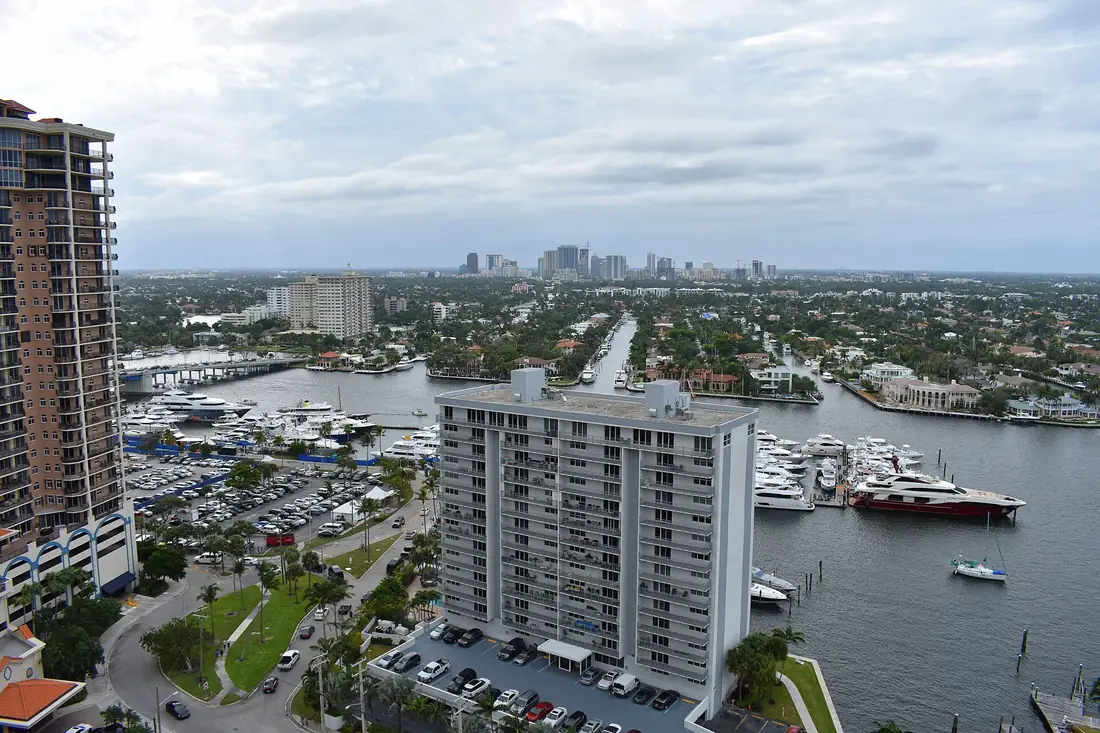
Waterfront residential high-rises and marina along the Intracoastal Waterway in Fort Lauderdale, with the downtown skyline in the distance. Photo: Tamanoeconomico, CC BY-SA 4.0, via Wikimedia Commons.
What a declarations page is, in plain words
It is the cover sheet of your policy: your specific details in one place, while the policy form holds the rules.
- Who, where, when and which form
- Every limit and deductible you chose
- Endorsements that change the standard wording
Florida's consumer insurance toolkit describes the declarations page as a summary of the essential information in the policy, usually the first page or two1.
You will hear it called the declarations page, the dec page or simply the declarations. It fills in a standard policy form with your particulars: your name, your unit, the policy dates, the limits and the add-ons you picked.
The form explains what is covered and what is excluded. The declarations page tells you how much of each coverage you bought. To know what a claim would pay, you need both.
Go deeper: how the declarations page fits with the rest of your policy
A full policy usually arrives as a packet: the declarations page, the policy form (for a condo unit owner, often the unit-owners form, HO 00 06 in its standard version), and each endorsement the declarations list. If a sales summary or an old quote disagrees with the issued policy, the issued policy controls.
Insurers usually send a fresh declarations page at each renewal and after any change during the term, such as a new limit or a new mortgage company. Keep the newest one; an older copy may show limits you no longer carry.
Get a copy of your declarations page today
Many owners can pull a copy in minutes from the insurer's website or app, or by asking whoever sold the policy.
- Insurer portal or app, under documents
- The agent or company that sold it
- Your mortgage servicer, if coverage runs through escrow
Online dec page copy
Log in to the insurer's website or app and open the policy documents. Many let you download the current declarations as a PDF or have it emailed.
Ask for the declarations page
Email or call the agent or company that sold the policy and ask for the current declarations page. It is a routine request.
Servicer's coverage file
If your insurance bill is paid from escrow, the mortgage servicer keeps proof of coverage on file and may send a copy when asked.
Have your policy number handy. It is printed on renewal notices and billing statements, and it makes any request quicker.
Go deeper: a declarations page versus proof of insurance
The two overlap, but they are not the same document. Proof of insurance is often shorter, such as an evidence of insurance form or a certificate, and confirms that a policy exists and who the mortgage company is. The declarations page shows every limit, deductible and endorsement.
A lender or closing agent may accept either, so ask which one they want. Buying, selling or refinancing? The page for realtors and lenders covers what closing teams usually request.
Read the top of the page: who, where, when, which form
Mistakes up top are easy to overlook and awkward at claim time, so check these lines first.
- Names match the deed
- The insured address is your unit
- The dates cover today
If anything here is wrong, ask the insurer for a corrected declarations page in writing.
Match each coverage limit to what it protects
Each coverage letter carries its own limit on the page. Tap a letter to see what it pays for.
- A: the walls-in part of the unit
- C: your belongings
- D, E, F: displacement, lawsuits, guest injuries
On the declarations page each letter sits on its own line with a limit beside it. Some forms express loss of use as a share of another coverage or as a length of time rather than a flat amount.
Go deeper: what to check on each coverage line
Coverage A: the walls-in limit
Coverage A reaches property permanently installed in your unit that the association's policy does not already insure2. Think flooring, cabinets, fixtures and upgrades. Size it against the master policy type and your improvements with how much condo insurance to carry.
Coverage C: the personal property limit
This is the limit for what you own inside. See whether the page, or an endorsement it lists, says replacement cost or actual cash value. Count your belongings room by room with the condo contents calculator.
Coverage D: the loss of use limit
This pays toward extra living costs if a covered loss forces you out. Note whether the page shows a dollar limit, a percentage of another coverage or a time limit.
Coverage E and F: liability coverage limits
Coverage E is the personal liability limit, usually per occurrence. Coverage F is a separate, usually much smaller, medical payments limit for guests hurt in or around your unit, often paid regardless of fault. Check your policy for how each applies.
Find every deductible, not just the first one
Many condo policies list more than one deductible, and which one applies depends on what caused the loss.
- All other perils: the everyday deductible
- Hurricane or wind: often its own line
- Percent deductibles often show a dollar figure too
The all other perils deductible (often shortened to AOP) applies to most claims, such as a kitchen fire or a burst supply line.
In hurricane-prone states, many policies add a separate hurricane, named storm or wind and hail deductible. It is often written as a percent of a coverage limit, with the dollar amount it works out to printed beside it. Check yours, including which limit the percent is based on.
Go deeper: percent deductibles and lender ceilings
A percent deductible moves with the limit it is based on. Raise that limit and the storm deductible in dollars may rise too. If your page shows only a percent, ask the insurer to confirm the dollar figure in writing.
A lender can cap the deductible as well. For a loan under Fannie Mae's guide, the unit policy deductible may be no more than the greater of 5% of the unit policy coverage amount or $2,5007. Ask your servicer which rule applies to your loan.
Florida owners can find more on storm deductibles on the Florida page. Flood is a separate policy.
Check the lines owners skip: assessments, endorsements, money
The lower half of the page decides how an association bill is handled, which wording was changed and what you pay for.
- Loss assessment has its own limit
- Endorsement numbers change the base form
- Mortgagee, premium and credits close it out
Go deeper: how to read an endorsement entry
Each entry usually pairs a form number with an edition date and a title. The number points to a standard or company form; the title gives the gist. Ask for a copy of any endorsement on the list that did not come with your packet.
Common condo endorsements broaden walls-in coverage, add water backup, raise the loss assessment limit or schedule valuables such as jewelry. Whether yours carries any of these shows up only on this list, so read it line by line.
Hold your dec page up against the master policy
Your declarations page only makes full sense next to the association's master policy, because the gaps sit where the two meet.
- Master policy type drives your Coverage A
- Master deductible drives your loss assessment need
- Your upgrades are often yours to insure
Ask the manager for the master policy summary or certificate, then compare three things:
- Master policy type. Bare walls, all-in or something between changes how much Coverage A you need. See how HO-6 insurance works with the master policy.
- Master policy deductible. Your share of it is a floor for your loss assessment limit. Run it in the loss assessment calculator.
- Your improvements. Upgrades you or earlier owners made often fall to you. Size them with how much condo insurance you need.
Spot the red flags before a claim does
These mismatches turn up often on condo declarations pages, and most are simple to fix at renewal.
- Many take one email to correct
- Fix them before a loss, not after
- Coverage A limit never reviewed against your improvements or the master policy type.
- Loss assessment limit small next to your share of the master policy deductible.
- Unit rented out, page says owner-occupied (or the reverse). A mismatch can affect a claim; check your policy.
- An owner or trust missing from the named insured line.
- An old mortgagee still listed after a refinance or loan sale.
- A storm deductible you did not know about, or its dollar figure left unchecked.
Go deeper: quieter things worth a second look
Personal property settled at actual cash value when you expected replacement cost. An endorsement listed that you never asked for, or one you asked for that is missing. A unit that now sits empty for long stretches; many forms treat a vacant unit differently, so tell the insurer when your use changes.
Upload your dec page for a line-by-line comparison
Upload your declarations page and a licensed agent compares the same coverage across multiple carriers.
- Matching limits, deductibles and endorsements
- Ask each company about credits
- A quote binds nothing
The agent reads each line of your current page, then asks several companies to quote the same limits, deductibles and endorsements, so any difference shows up line for line. You decide whether to change anything.
Condo unit owners can request quotes this way: upload your declarations page, plus the master policy summary if you have it. A quote does not bind coverage; a policy starts only once you accept it and it is issued.
Declarations page questions condo owners ask
What is a declarations page on a condo policy?
It is the summary at the front of your HO-6 policy. It lists the named insured, the unit address, the policy period, the form, each coverage limit, your deductibles, the endorsements attached and the mortgage company. The policy form beneath it explains what those coverages mean.
Where do I get my insurance declarations page?
Start with the insurer's website or app, usually under policy documents. You can also ask the agent or company that sold the policy, or your mortgage servicer if the bill is paid from escrow. A new one is usually issued at each renewal and after any change.
Can I get a copy of my dec page online?
Often, yes. Many insurers post the current declarations page in the customer portal or app, where you can download it or have it emailed. If yours does not, ask the company or agent directly; sending a copy is a routine request.
Is a declarations page the same as proof of insurance?
Not exactly. Proof of insurance is often a shorter certificate or evidence form confirming a policy exists and who the lender is. The declarations page carries the full detail: every limit, deductible and endorsement. Lenders and closing agents may accept either, so ask which they need.
Does my declarations page show the master policy coverage?
No. Your HO-6 declarations page covers only your own policy. The association's master policy has its own declarations, summary or certificate, which you can request from the manager. Comparing the two is how you find what falls between them.
Why does my condo declarations page list two deductibles?
Many policies in storm-prone areas carry an all other perils deductible for everyday claims and a separate hurricane, named storm or wind deductible. The second is often a percent of a limit, sometimes shown with its dollar figure. Which one applies depends on the cause of the loss.
What if my declarations page shows the wrong information?
Ask the insurer or agent to correct it and to send a revised declarations page in writing. A wrong unit number, a missing owner, an outdated mortgagee or the wrong occupancy is worth fixing before a claim, not during one.
Before you renew, make one call.
A licensed agent compares several companies on the same limits. Asking changes nothing on your policy, and a quote never binds you.