Your one stop for condo insurance.
Stop calling agent after agent for one quote each. One call, and a licensed agent shops your HO-6 with several insurance companies, A-rated options included, then lays the offers side by side. You pick.
You are in the right place. Keep reading for the answer, or call and let the shopping start now.
Condo unit owners reading their policy
HO-6 Policy Form
The licensed agent behind this site reads the unit-owners form with you, part by part, so you know what your condo policy pays before a claim tests it, then compares that coverage across several companies.
The short version: many HO-6 policies follow one standardized layout. Learn the layout once and any version of the form, or the endorsements that change it, gets much easier to read.
- One call, not ten
- Several companies shopped for you
- No obligation: a quote never binds
Compare my condo quotes
Several companies, side by side. You decide.
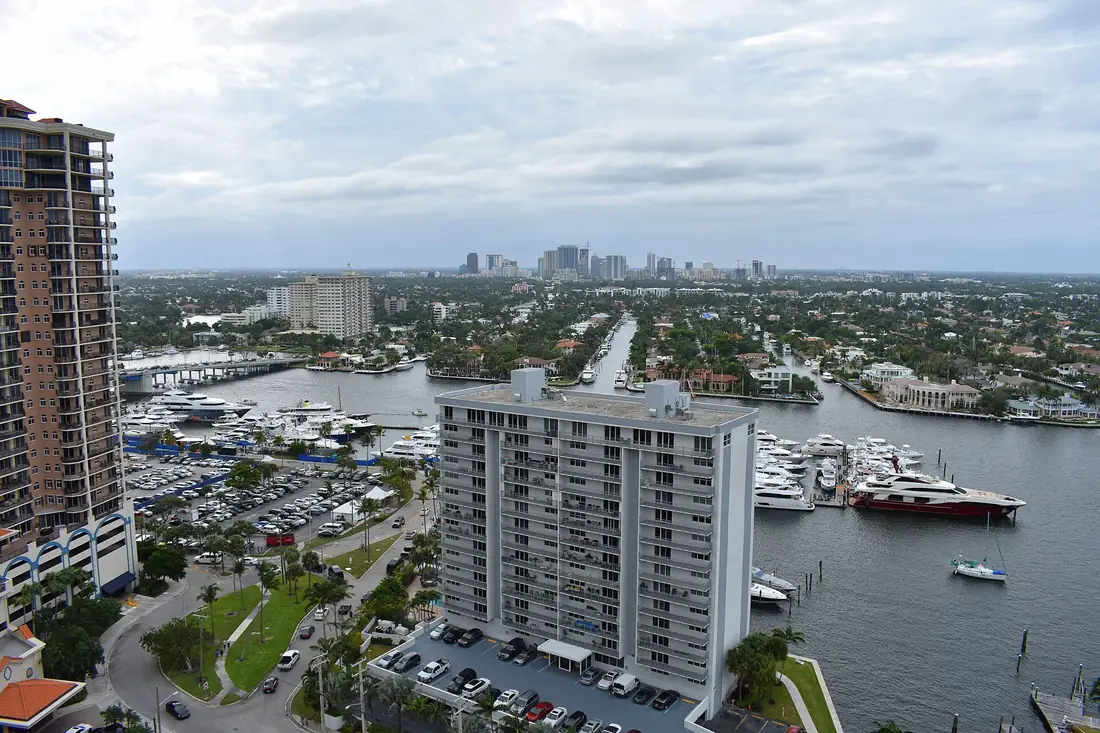
Waterfront residential high-rises and marina along the Intracoastal Waterway in Fort Lauderdale, with the downtown skyline in the distance. Photo: Tamanoeconomico, CC BY-SA 4.0, via Wikimedia Commons.
Know which form your condo policy is built on
Many condo policies start from one standardized unit-owners form. Knowing its layout tells you where to look before you file a claim.
- HO 00 06 is the common standardized form
- Insurers may file versions of their own
- Your policy's wording is what counts
HO-6 is the shorthand for a unit-owners policy. HO 00 06 is the form number of the standardized version that many insurers use as a starting point, sometimes as written and sometimes with changes of their own.
Insurers can also file forms of their own, and state-specific endorsements often rewrite parts of it. Read the form list on your own policy instead of assuming it matches a sample you found online.
Go deeper: why two HO-6 policies can read differently
The standardized form is revised from time to time, so an older edition and a newer one can word the same coverage differently. The edition date usually prints right beside the form number.
Public plans use the standard name too: the Massachusetts residual market plan's quick reference lists a Condo Unit Owners Form HO 00 06 in its homeowners program1 (see Massachusetts).
A company form of its own may keep the same coverage letters and change the details underneath. The letters line up; the wording may not. For what the policy does overall, start with the HO-6 insurance guide.
Walk through the front of the form and Section I
Swipe through the parts that describe your unit, your belongings and your costs while you live somewhere else.
- Definitions steer every other section
- Coverage A, C and D sit in Section I
- Loss assessment is an additional coverage
Each card explains in plain English what that part of a typical unit-owners form does. None of it is the form's own wording, and your version may differ.
Find out which causes of loss your form actually covers
The coverage letters say what is insured. The perils and exclusions say what has to happen for a claim to pay.
- Named perils: only the causes listed
- Open perils: every cause not excluded
- Exclusions apply either way
On many standard unit-owners forms, both Coverage A and Coverage C are insured against a list of named perils, such as fire, windstorm, theft and certain escapes of water. If the cause of a loss is not on the list, that claim does not pay.
The Illinois FAIR Plan, for example, describes its condo owner HO 6 form as actual cash value with broad named perils3. Some policies switch Coverage A to open perils by endorsement: then every cause is covered unless an exclusion removes it. Check your policy for which structure it uses.
Go deeper: the exclusions a unit owner should know
Exclusions sit in their own part of Section I. In plain words, a typical unit-owners form leaves out loss caused by:
- Earth movement, such as an earthquake or a landslide
- Water from outside, water that backs up through drains, and water that seeps up from below ground
- Enforcing building codes, beyond any limited additional coverage the form gives
- A power failure that starts away from the building
- Neglect, intentional loss, war, nuclear hazard and certain government action
Gradual damage, such as wear, rot or pests, usually falls outside a named perils list anyway. Flood is a separate policy. The exact exclusion list and its wording differ by form and state, so read the one in your own policy.
Water that comes from another condo unit
Water that escapes suddenly from plumbing or an appliance is commonly on the named perils list, while a slow leak often is not. When the water starts upstairs, see water damage from the unit above.
Know what the conditions ask of you after a loss
The conditions decide how a claim runs: what you must do, how the loss is valued and who gets the payment.
- Report fast and protect the unit
- The settlement method shapes the payment
- Your lender can be named on it
Duties after a loss under the policy form
Report the loss promptly, protect the unit from more damage, keep receipts, list what was damaged and sign a proof of loss if asked.
How a Coverage A or C loss is settled
Many unit-owners forms pay actual cash value (replacement cost less wear) on belongings unless an endorsement adds replacement cost. Your declarations page shows which applies.
Coverage next to the association's policy
When the association's policy also covers a loss, the unit-owners form commonly pays only the part above it, so the master policy summary matters when you set limits.
The mortgage clause in the HO-6 form
A lender named on the declarations page can be included on property payments and notified before cancellation. Loan programs set their own rules; see the page for realtors and lenders.
Go deeper: other conditions worth a slow read
An appraisal condition gives you and the insurer a way to settle a disagreement over the amount of a loss. Another condition limits when and how you can sue the insurer, so note any time limit it sets.
A concealment or fraud condition lets the insurer deny coverage to anyone who lies about a claim. Cancellation and nonrenewal rules sit among the conditions too, and a state endorsement often rewrites them.
See what Section II does when someone blames you
Section II is the liability half of the form. It steps in when someone says you hurt them or damaged their things.
- Coverage E: lawsuits and damages against you
- Coverage F: guests' medical bills, fault aside
- Its own exclusions and conditions apply
Coverage E defends you against certain suits and pays when you are held legally responsible for another person's injury or damaged property4. On many forms the defense cost does not reduce the limit.
Coverage F pays medical bills for people injured on your property5, with no need to prove you were at fault. It is not for your own injuries or those of your household.
Go deeper: Section II exclusions and conditions
Section II exclusions in plain words
The liability coverages usually leave out injury you intend, business and professional activities, most motor vehicles, and injury to you or members of your household. Terms about renting the unit out also show up here, so tell your insurer if you rent it.
Section II conditions: your side of a liability claim
If something happens, give the insurer notice, pass along any legal papers you receive right away, and help with the defense. Do not agree to pay a claim on your own, beyond immediate first aid, because the insurer may not reimburse it.
Tap each coverage letter for the plain-English version
The same letters appear on your declarations page. Match each one to its job before you judge the limit beside it.
- A, C and D: property and loss of use
- E and F: liability and guests' medical bills
- Limits print on the declarations page
These tabs summarize a regulator's consumer guide to the condo form, not your contract. Where the two differ, your policy's text wins.
Endorsements change the form, so ask what yours adds
An endorsement is a page that adds, removes or rewrites part of the standard form. Condo policies often carry several.
- It changes coverage on your policy only
- The declarations page lists each one
- Ask whether your policy has it
Think of the base form as default settings and each endorsement as a change to them. Some come from the state, some come with the company's program, and some you choose.
Go deeper: the same endorsements show up in public plan manuals
North Carolina's coastal plan, for instance, lists the HO 00 06 unit-owners form among the homeowner forms it writes, together with a unit-owners Coverage A special coverage endorsement8 (see North Carolina).
Virginia's residual market plan lists a residential association loss assessment endorsement among its condominium options9 (see Virginia). Endorsement names and numbers vary by company, so when a quote lists one you do not recognize, ask what it changes.
Florida HO-6 policy forms: where they are filed
In Florida, state law shapes the unit-owners form, and the state's insurance regulator keeps the filings behind it.
- The condo act lists what the owner insures
- Loss assessment has a floor set by law
- Keep any coverage checklist from your insurer
Florida's condo act makes the owner responsible for insuring personal property in the unit and a listed set of interior items that serve only that unit, such as coverings, electrical fixtures, appliances, water heaters and built-in cabinets10 (Fla. Stat. § 718.111(11)(f)3., (g)10).
Florida's Office of Insurance Regulation says personal lines policy form filings are subject to its approval11. Filings are public through the IRFS Forms and Rates Filing Search, which looks up filings by company or product name12: open the regulator's filing search.
Florida law also requires a checklist of coverage and an outline of coverage for a condominium unit owner policy13 (Fla. Stat. 627.4143(3)13). Read yours beside the declarations page, or ask your insurer for it.
Go deeper: the Florida checklist form, the residual market's condo form, and what a filing shows
The unit-owner policy itself must include property loss assessment coverage of at least $2,000 for all assessments that come from one direct loss the policy covers14 (Fla. Stat. § 627.714(1)14).
The adopted checklist is form OIR-B1-1670, listed on the regulator's product review page15 (see the regulator's forms list). One checklist form serves several policy types, with a Policy Type line the insurer marks for a condominium unit owner's policy16.
Citizens, Florida's residual market, lists a condominium unit owners policy (HO-6) for owners who live in the unit, plus a wind-only version (HW-6)17. See Florida for how that fits the rest of the state's market.
A filing shows the form an insurer asked to use, not necessarily the edition on your policy. Your declarations page and the forms attached to it are what apply to you.
Find the exact form your own policy uses
The declarations page lists every form and endorsement on your policy. That list is the map to your real coverage.
- Look for the forms and endorsements list
- Match each form number to a page
- Ask for any page that is missing
- Open the declarations page. It usually sits at the front of the policy packet or renewal.
- Find the forms list. Look for a block of form numbers with edition dates.
- Spot the base form. A unit-owners form number, or the company's own form name, is the base. The rest are endorsements.
- Read the endorsements next. Each one changes the base form, so read them before you rely on a sample.
The declarations page guide shows where each item sits. If a form on the list is not in your packet, ask your insurer or agent for a copy.
Compare the same form and endorsements across several companies
Two quotes can both say HO-6 and still treat your unit differently. Line up the forms, not just the limits.
- Same limits and deductibles on each quote
- Ask which endorsements each one includes
- A quote binds nothing
The agent reads your declarations page and the master policy summary, asks several companies to quote the same limits, and points out where their forms or endorsements differ. You decide.
Ask each company which discounts or credits apply to your unit; the quote shows them. A quote does not bind coverage, which starts only once you accept a policy and it is issued. Prefer writing? Send a quote request.
HO-6 policy form questions
Does an HO-6 policy cover drywall?
Often, when your documents make the interior walls yours to insure and a covered peril causes the damage. Coverage A pays for building items in the unit that the association's policy leaves out. If the master policy covers the walls, your HO-6 may reach only the finishes. Check your declaration and your policy.
Is condo insurance HO-3 or HO-6?
A condo unit is normally insured on the HO-6, the unit-owners form, because the association's policy handles the shared structure. The HO-3 is built for a house its owner insures in full. A townhouse can go either way; see HO-6 vs HO-3 for how the documents decide.
Who qualifies for an HO-6 policy?
Generally, anyone who owns a condominium unit, and many companies write co-op owners on the same form. Each insurer sets its own eligibility rules, for example for a unit that is rented out, vacant or used for business, so tell every company how you use the unit before it quotes.
What does HO-6 insurance actually cover?
Building items in your unit the association does not insure (Coverage A), your belongings (C), extra living costs after a covered loss (D), liability claims against you (E) and guests' medical bills (F), plus additional coverages that often include loss assessment. What it pays depends on the perils, exclusions and endorsements in your version.
What is a condo endorsement?
It is a written change attached to your policy that adds, removes or rewrites part of the unit-owners form. Common condo endorsements switch Coverage A to open perils, raise the loss assessment limit, add water backup coverage, or adjust the form for a unit you rent out. The declarations page lists every one you have.
Is the HO 00 06 the same at every insurance company?
No. Many insurers start from the standardized form, but they may use a different edition, add state endorsements, or file a form of their own. Two HO-6 policies can therefore treat the same loss differently. The form numbers on your declarations page tell you which version you have.
Where can I read my own HO-6 policy form?
In your policy packet. The declarations page lists the forms, and the pages behind it are the forms themselves. If a page is missing, ask your insurer or agent for the complete policy. A sample form online may not match the edition or state version you were issued.
Before you renew, make one call.
A licensed agent compares several companies on the same limits. Asking changes nothing on your policy, and a quote never binds you.