Your one stop for condo insurance.
Stop calling agent after agent for one quote each. One call, and a licensed agent shops your HO-6 with several insurance companies, A-rated options included, then lays the offers side by side. You pick.
You are in the right place. Keep reading for the answer, or call and let the shopping start now.
Condo owners weighing open perils for the unit
Unit Owners Coverage A Special Coverage
The licensed agent behind this site explains unit-owners Coverage A special coverage as one swap: the part of your HO-6 that insures the unit itself moves off a list of named causes and onto open perils, so a loss to it is covered unless the policy excludes it. Your belongings keep the named list, and the exclusions stay.
It is worth asking for when Coverage A carries a big job, such as a bare-walls building or a unit full of upgrades, or when your lender asks which form you carry.
- One call, not ten
- Several companies shopped for you
- No obligation: a quote never binds
Compare my condo quotes
Several companies, side by side. You decide.
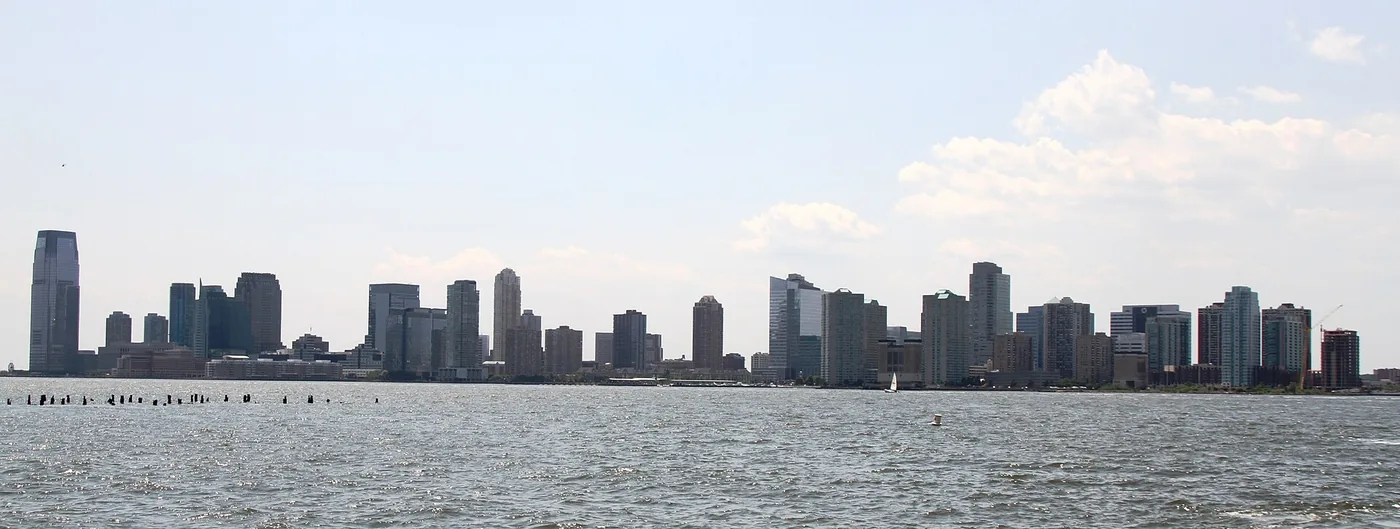
Jersey City Hudson River waterfront skyline of residential and office towers. Photo: Bjoertvedt, CC BY-SA 3.0, via Wikimedia Commons.
Unit owners Coverage A special: open perils for the unit itself
One endorsement changes how the building part of your condo policy decides whether a loss is covered.
- Coverage A moves to open perils
- Belongings keep the named list
- Exclusions still apply
A standard HO-6 lists the causes of loss it pays for. The standard unit-owners form covers both Coverage A and Coverage C against named perils, among them fire or lightning, windstorm or hail, theft, smoke, falling objects, freezing and accidental discharge of water or steam, unless an exclusion applies1.
The special coverage endorsement rewrites that rule for Coverage A alone. Once it is attached, the insurer covers direct physical loss to Coverage A property unless an exclusion in the policy or in the endorsement takes it out2.
Go deeper: the form numbers behind the name
A forms filing published by North Carolina's rate bureau lists the multistate endorsement as HO 17 32, Unit-Owners Coverage A Special Coverage, revised in its 02 17 edition, and marks that edition as not for use in North Carolina3. The same packet's North Carolina supplement revises the state's own version, HO 32 34, to a 01 19 edition4.
North Carolina's coastal property pool, the state's residual market, writes the HO 00 06 and lists that state version, the HO 32 34 unit-owners Coverage A special coverage endorsement, in its manual5 (see North Carolina).
Companies that file forms of their own may give the same idea a different number or title. When a quote lists an endorsement you do not recognize, ask which coverage letter it changes and how.
HO-6 named perils vs open perils, in plain words
The perils basis decides what has to be shown before a claim on the unit pays.
- Named perils: the cause must be on the list
- Open perils: covered unless excluded
- Neither one covers everything
Maryland's insurance regulator draws the line simply: a named peril policy pays only for damage from a cause the policy lists, while an open perils or all-risk policy covers every cause of loss the policy does not specifically exclude6.
Picture named perils as a guest list: a cause not on it stays outside. Open perils turns away only the causes it names.
Named perils on a standard HO-6
Maryland describes the condo form as covering the perils listed in the Broad Form, which is a named peril form7.
Open perils, also called all-risk or special form
North Carolina's consumer guide treats all-risk and special form as two names for one idea, any peril except those the contract excludes, and says the unit-owners form names its perils instead8.
Go deeper: what a claim turns on, and how a house policy compares
What an open perils claim turns on
On a named list, the question after a loss is whether a listed cause did the damage. On open perils, the question becomes whether an exclusion applies. The second question leaves fewer gaps for odd causes.
An older Texas order describing the standard forms says the special form insures a house against the risk of direct physical loss with certain exceptions, keeps personal property on named perils, and has the unit-owners form cover personal property against named perils9.
So the endorsement gives the unit's built-in parts roughly the treatment a house policy gives the house. For the full comparison of the two policies, see condo insurance vs homeowners insurance.
What the endorsement swaps, and the half it leaves alone
It widens the covered causes for the unit's built-in parts. Your furniture and clothes keep the old list.
- Coverage A: open perils
- Coverage C: still named perils
- Your limits stay where you set them
Coverage A insures what is permanently installed in the unit and not already covered by the association's policy10. On the standard form that reaches alterations, appliances, fixtures and improvements that are part of the building within the unit, plus property the association's agreement makes yours to insure11.
The endorsement reaches Coverage A only and leaves Coverage C as it was; North Carolina's rate bureau manual uses a separate endorsement, HO 32 35, when personal property is to get special coverage12.
Tap A and C below. The endorsement reaches the first and leaves the second as it was.
Go deeper: what the swap does not do
- It does not raise a limit. Coverage A pays up to the same amount as before. If the limit is too low, a wider perils basis does not fix that.
- It does not move the association line. What the master policy insures and what you insure still come from the declaration and the master policy.
- It may not touch the other coverages. Ask how your form treats loss of use and loss assessment after the swap; wording varies by company.
Know what stays excluded even on open perils
Open perils is wider, not unlimited. Slow damage, upkeep problems and a few named situations stay outside it.
- Wear, rot and slow leaks stay out
- The base form's exclusions still apply
- The endorsement adds a short list of its own
Virginia's insurance bureau warns that even an open perils policy does not cover every possible cause of loss17. The endorsement keeps the policy's exclusions and adds more.
In North Carolina's version, Coverage A still does not cover, among other things, wear and tear, deterioration, mechanical breakdown, rust, cracking from settling or expansion, pests, or water or moisture that seeps or leaks constantly or repeatedly over weeks, months or years18.
That last item matters most in a condo. A drip behind a dishwasher that rots the subfloor over months is the kind of loss upkeep is expected to prevent, on either perils basis.
Go deeper: the rest of the exclusion list
The same list leaves out collapse beyond what the policy's collapse coverage gives, freezing of plumbing, heating, air conditioning or sprinkler systems unless reasonable care was taken to keep heat on or drain them, theft in a unit under construction, and vandalism once the building has been vacant for more than 60 days in a row18.
It also adds three exclusions for Coverage A: weather that combines with an excluded cause, acts or decisions of any person, group or governmental body, and faulty planning, design, workmanship, materials or maintenance, while any resulting loss that is not otherwise excluded is still covered19.
The base form's own exclusions carry over too, such as earth movement, water that backs up through drains or comes up from below ground, and enforcing building codes beyond any additional coverage. Flood is a separate policy.
Ask for it when Coverage A carries a big job
The more of the unit your own policy has to rebuild, the more a wider perils basis is worth a look.
- Bare-walls buildings
- Units with owner upgrades
- Loans that ask about the form
Washington's regulator explains that a bare-walls master policy stops at the uncovered sheetrock and subfloor, leaving owners responsible for every interior finish and the community deductible20.
When floors, cabinets, counters and fixtures all ride on Coverage A, a cause that misses the named list can leave a large repair unpaid.
Bare walls: the whole interior sits on Coverage A
Every finish inside the drywall line is yours to rebuild, so the perils basis reaches most of the unit.
Owner upgrades and improvements
Custom tile, stone counters and built-ins you or an earlier owner added often fall outside the master policy. Open perils widens the causes that can pay for them.
All-in master policy: a smaller Coverage A
When the association insures the finishes, your Coverage A may be small, and the swap may matter less. Confirm how the master policy treats improvements before you decide.
Go deeper: size it first, and townhouse or rental cases
Find your master policy type in the condo master insurance policy guide, then total the interior with how much condo insurance you need. A perils basis only helps up to the limit you carry.
A townhouse insured on a unit-owners form can carry a large Coverage A too; the townhouse insurance guide covers which form fits. If you rent the unit out, ask whether the landlord version of your form offers the endorsement, and note the vacancy rule in its exclusion list. More in rental condo insurance.
Check what your lender means by a special form
Loan rules can mention the perils basis directly, so this endorsement can come up before closing.
- Fannie Mae's guide names a special form
- It says should, not must
- Certain perils must be covered either way
Fannie Mae's Selling Guide says the unit owners property policy should be written on a special coverage form or an equivalent21 (Fannie Mae Selling Guide B7-3-0421).
Because a standard HO-6 starts on named perils, a lender or closing team reading that line may ask about your Coverage A. The endorsement is one way to bring a unit-owners policy closer to it. Ask your lender in writing what it accepts.
Go deeper: the perils a Fannie Mae loan lists
The guide calls for a unit owners policy in the first place when the master policy leaves any part of the interior or improvements uncovered, or carries a per-unit deductible22.
At a minimum, it says the unit owners policy must cover fire or lightning, explosion, windstorm including named storms, hail, smoke, aircraft, vehicles, and riot or civil commotion23.
If the master policy has a per-unit deductible for one of those perils, the unit owners policy must cover it, and if the unit owners policy excludes or limits a required peril, the borrower needs another acceptable policy for that peril24.
Other loan programs set their own condo rules, and a lender can ask for more than a program minimum.
Tell from your declarations page whether you already have it
The endorsement shows up as a line in the forms list, not as a limit of its own.
- Look for special coverage near Coverage A
- Match each form number to a page
- Ask in writing if it is unclear
- Find the forms list. Near the end of the declarations page, look for form numbers with edition dates and short titles.
- Scan the titles. A title that pairs Coverage A with special coverage is the one. Some companies use their own wording, such as open perils or all risk for the dwelling part.
- Read the Coverage A line. Some declarations print the perils basis beside the limit.
- Still unsure? Ask the insurer: is my Coverage A on named perils or open perils?
Florida's insurance regulator notes that condo coverage usually runs on named perils and that some insurers let it be extended to open perils25. So not every quote includes it, and not every company offers it.
The declarations page guide shows where the forms list sits, and the HO-6 policy form guide explains the base form the endorsement changes.
Get Coverage A quoted both ways, side by side
Named and open perils on the same limits is how you judge whether the swap earns its place.
- Same Coverage A limit on each
- Endorsement on and off
- A quote binds nothing
The agent behind this site asks several companies to quote your unit with the same Coverage A limit and deductible, with and without the endorsement wherever a company offers it. One company's quote shows one company's answer; lined up together, the form differences show.
Ask each company which discounts or credits apply to your unit. A quote does not bind coverage; it starts only once you accept a policy and it is issued. New to the coverage letters? Start with the HO-6 insurance guide, or send a quote request.
Unit-owners Coverage A special coverage questions
Is an HO-6 named perils or open perils?
Usually named perils. The standard unit-owners form lists the causes it insures for both the unit's built-in parts and your belongings. Some companies offer an endorsement that moves Coverage A to open perils, while personal property normally stays on the list. Your declarations page and forms list show which you have.
Can I buy an all-risk condo policy?
Partly. The usual route is the unit-owners Coverage A special coverage endorsement, which puts the property you insure inside the unit on an all-risk, or open-perils, basis. Belongings generally stay on named perils unless a separate endorsement widens them. Not every company offers it, so ask each one and read what it still excludes.
Does special form condo coverage change my personal property coverage?
Not on its own. The Coverage A special coverage endorsement changes the perils basis for Coverage A only. Furniture, clothing and electronics under Coverage C keep the named list. Some programs offer a separate endorsement for personal property, so ask whether a quote includes one and how it appears on the declarations page.
Would open-perils Coverage A pay for a toilet that leaked slowly for a year?
Probably not. Water that seeps or leaks constantly or repeatedly over weeks, months or years stays excluded under the endorsement18, and it is off a named list too. Damage to the unit below is a separate question; see water damage from the unit above.
A water heater burst in a hard freeze. Does special coverage on Coverage A help?
Two things decide it. First, whether the heater is yours to insure: equipment mounted outside the unit may belong to the association. Second, the freezing rule, which on many forms pays only if you took reasonable care to keep heat on or drain the system. Open perils does not remove that condition.
Should open perils cover a rooftop air conditioner damaged by a loose bolt?
Often not. Wear and tear, deterioration and mechanical breakdown stay excluded even on open perils, and a bolt that works loose over time can fall into those. A sudden event, such as a windstorm, is a different question. First confirm whether the rooftop unit is yours to insure or the association's.
Is unit owners Coverage A special coverage worth asking for?
It tends to matter more when your Coverage A limit is large, as in a bare-walls building or a unit with costly upgrades, and when a lender asks about a special form. Get quotes with and without it on the same limits, then read the exclusions before you decide.
Before you renew, make one call.
A licensed agent compares several companies on the same limits. Asking changes nothing on your policy, and a quote never binds you.