Your one stop for condo insurance.
Stop calling agent after agent for one quote each. One call, and a licensed agent shops your HO-6 with several insurance companies, A-rated options included, then lays the offers side by side. You pick.
You are in the right place. Keep reading for the answer, or call and let the shopping start now.
Fort Lauderdale condo unit owners
Condo Insurance Fort Lauderdale
The licensed agent behind this site compares HO-6 quotes from several companies for Fort Lauderdale condo owners. The short answer: if your building has some years on it, the coverage questions that decide a claim are about pipes, past remodels and water that travels from one unit into the next.
Florida's condo act hands your interior finishes to you, and Broward County's storm record bears on the deductible you pick. This page lines up both with the city's housing numbers.
- One call, not ten
- Several companies shopped for you
- No obligation: a quote never binds
Compare my condo quotes
Several companies, side by side. You decide.
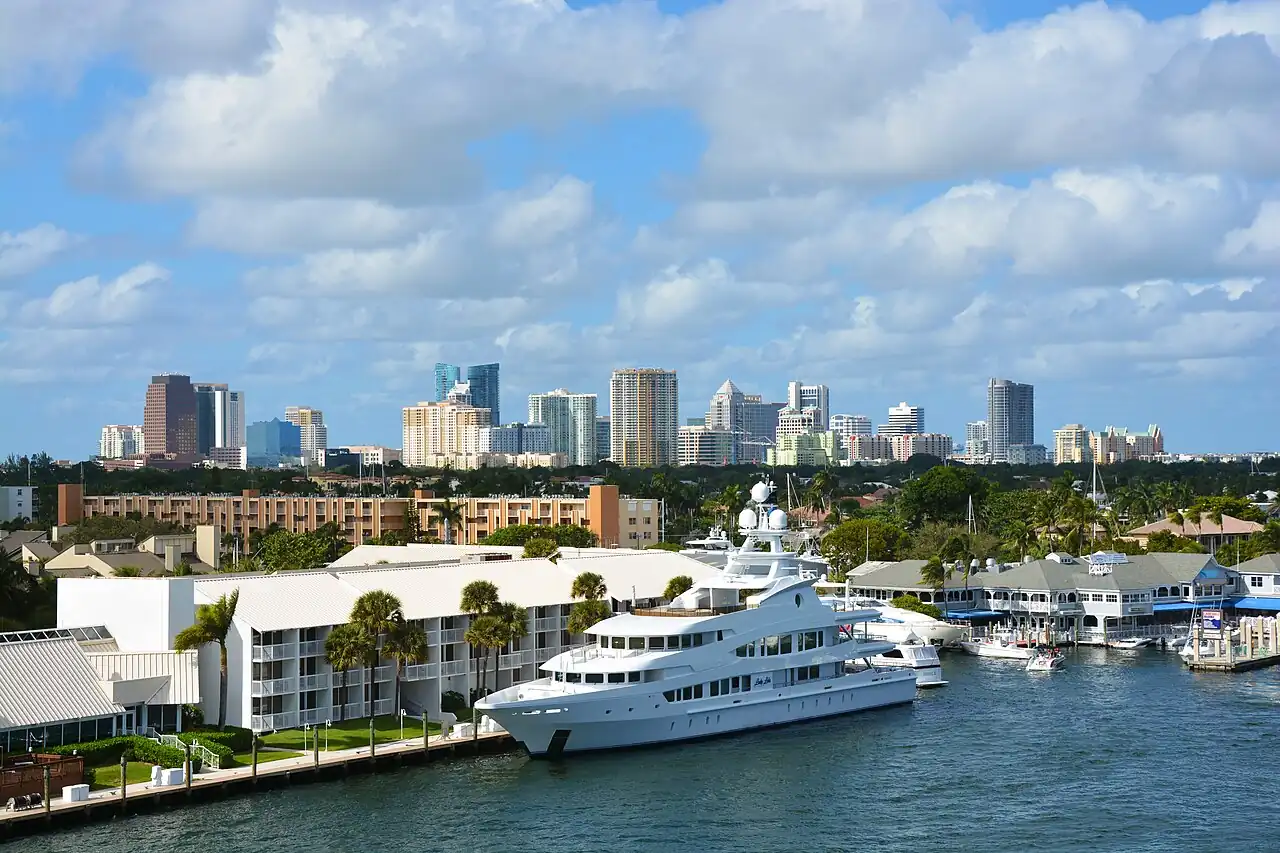
Downtown Fort Lauderdale high-rise towers behind waterfront buildings and marinas on the Intracoastal waterway, Fort Lauderdale, Broward County. Photo: KeanoManu, CC BY-SA 4.0, via Wikimedia Commons.
Older buildings change what your HO-6 has to carry
The year your building went up shapes the claims owners file and the bills an association may send.
- Find the year built before you set limits
- Ask what has been replaced, and when
- Read the reserve study, not only the budget
Half of Fort Lauderdale's housing units are in structures built in 1973 or earlier, going by the median year built in the Census Bureau's 2020-2024 American Community Survey1.
Across Broward County, that survey's median year built is 19802.
A building with decades behind it may still run on original supply lines and drain stacks, and plenty of its units have been remodeled more than once. Both habits show up in HO-6 claims.
Go deeper: reserves, repairs and why age reaches your wallet
Age matters to the association's budget as much as to your policy. Where an association is required to have a structural integrity reserve study (SIRS), budgets adopted on or after Dec 31, 2024 cannot carry a vote to skip or shrink reserves for the study's items, and those reserves cannot be spent on anything else3 (Fla. Stat. § 718.112(2)(f)2.b., 3.3).
- Funding catches up through owners. If reserves are behind, the gap is closed with a bigger budget, a special assessment, or both.
- Upkeep is not a loss. Repairs the building simply needs are maintenance, and an HO-6 generally does not pay for maintenance.
- Ask before you buy or renew. Request the latest reserve study, any structural inspection reports and a list of assessments the board has approved or is weighing.
The statute allows a narrow exception for a multicondominium using an alternative funding method that the state's condominium division approved. The Florida condo insurance guide covers the statewide rules in more depth.
Water crossing between units: know whose policy answers
In a stacked building a leak seldom stays put. Knowing which policy responds gets your claim moving sooner.
- Your finishes and belongings are your claim
- Shared pipes are a declaration question
- A careless neighbor's liability may come in later
Under Florida's condo act, the association's policy must leave out the coverings on your floors, walls and ceilings, your built-in cabinets, counters, fixtures and appliances, and everything you own inside the unit4 (Fla. Stat. § 718.111(11)(f)3.4).
So when water drips through from upstairs, your HO-6 is the policy for those items, as long as your form covers the cause and your limits stretch far enough.
Tap where the water started to see the usual split.
The guide to water damage from the unit above walks through the first hours after a leak.
Go deeper: older plumbing and what to ask the board
Serving one unit or several. Florida puts on the owner's side the interior items that serve only that owner's unit5. A riser or stack that feeds several units is a different question, and your declaration answers it.
Sudden versus slow. Many forms treat a burst line differently from a drip that went on for weeks. Read the water wording in your policy, and fix small leaks as soon as you see them.
Replacement rules. Some associations set rules for water heaters, supply hoses or shutoff valves. Ask the manager whether yours has one and keep proof when you comply.
After the leak. Report it to the manager in writing, photograph the damage before cleanup, and open a claim on your own policy without waiting on the neighbor's company.
Put a price on the upgrades a past owner left behind
Remodeled kitchens and baths are yours to insure, even when someone before you paid for them.
- Florida's list includes replacements
- Most of it sits under Coverage A
- Add each line, then set the limit
Florida makes the listed interior items, and any insurance on them, the unit owner's responsibility5 (Fla. Stat. § 718.111(11)(f)3., (g)5). In a unit that has changed hands a few times, that can mean tile, cabinetry and plumbing fixtures you never chose.
Coverage A is the part of an HO-6 that handles permanently installed property the association's coverage leaves out6. Enter what each item would cost to replace today.
Walls-in estimator
List what you would have to rebuild inside your unit if the master policy stops at the bare walls. Enter your own replacement cost for each line. The tool adds; it does not price anything.
Go deeper: appliances, fixtures and what a lender expects
Built-in or freestanding. On the standard HO-6 form many carriers use, built-in appliances usually count as Coverage A property; check your policy7. A freestanding washer or refrigerator may sit under personal property instead, so ask.
Plumbing upgrades. New vanities, fixtures and a replaced water heater that serves only your unit belong in the Coverage A figure, not just the cabinets people remember.
Lender minimums. A loan that follows Fannie Mae's guide expects your unit coverage to at least restore the interior the master policy leaves out, or to equal the master policy's per-unit deductible when that is larger8.
Want help with the numbers? See how much condo insurance you need. Endorsements that widen what Coverage A pays for are in the HO-6 policy form guide.
Broward County storm reports, read for a unit owner
Federal storm records for Broward show why your hurricane deductible and the master policy's wind terms deserve a look.
- Counts are database report rows, not storms
- Zone reports can list one storm more than once
- Your deductible choice is where it reaches you
These are entries in a federal database, not a forecast. A tropical storm crossing several Broward forecast zones is logged once per zone, so the report count can run higher than the number of storms.
For your own policy, a Florida insurer has to offer a flat $500 hurricane deductible plus choices of 2, 5 and 10 percent of the policy dwelling limits13, subject to exceptions (Fla. Stat. § 627.701(3)(a)13).
The building has its own wind deductible on the master policy. A storm loss inside it is paid with association money, and that can come back to you as an assessment.
Loss assessment calculator
Math only. Enter the association's master-policy deductible and your share of the association (from the declaration). The result is what your share of that deductible would be, compared with the loss assessment limit you carry.
Whether your loss assessment coverage pays an assessment for the association's deductible depends on your policy form. Ask before you rely on it.
Go deeper: the percentage base and assessments after a storm
Which limit the percentage uses. The statute ties the percentages to "policy dwelling limits" and does not say what that means for a condominium unit owner policy14. Ask your insurer whether it uses Coverage A alone or A plus C, and read the dollar figure on your declarations page.
Assessments after a covered storm. Loss assessment coverage may help with a special assessment the association levies for a community loss, such as wind damage beyond the master policy limits, and it follows the causes your own policy covers15. Whether it pays toward your share of the association's deductible depends on your form.
The loss assessment coverage guide shows how to size that limit.
In a big building, the declaration sets your share
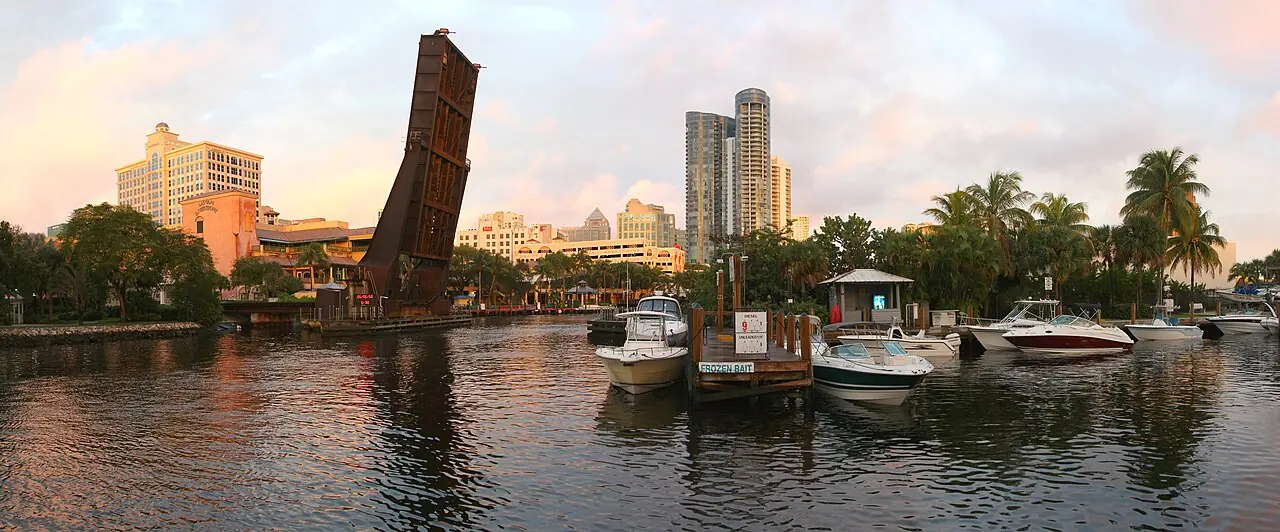
More owners under one master policy means one deductible and one budget split many ways. Know your slice.
- Get the master policy certificate
- Find your ownership share in the declaration
- Match loss assessment coverage to both
In the Census Bureau's 2020-2024 survey, 37.6% of Fort Lauderdale housing units are in buildings with 20 or more units16.
Buildings with 10 to 19 units hold 6.0% of the city's housing units in the 2020-2024 survey17.
Across Broward County, the 2020-2024 survey places 28.8% of housing units in buildings with 20 or more units18.
Your HO-6 starts where the master policy stops. When the association passes a covered building loss on to owners, loss assessment coverage is the part of your policy that responds.
Go deeper: Florida's loss assessment floor and the papers that set your share
Each Florida unit-owner policy has to include at least $2,000 of loss assessment coverage, one limit for all assessments from the same direct loss, when the policy covers that kind of loss19 (Fla. Stat. § 627.714(1)19).
- The master policy certificate shows the building's limits and deductibles, including wind.
- The declaration shows your ownership share and where the unit's boundaries fall.
- The bylaws or rules may say how the board handles a deductible after a loss that starts in one unit.
With those three in hand, the statutory floor becomes a starting line rather than a finish.
Turned down by private companies? Check Citizens next
Florida's residual market writes unit-owner policies, with conditions worth confirming before you count on it.
- Written for owners who live in the unit
- A value ceiling on dwelling plus contents
- A wind-only form exists too
If you live in the unit, Citizens lists two forms for you: the HO-6, and the HW-6 for wind alone. Between them they reach some interior features, your personal property, extra living costs and liability, and they stop short of the building's exterior20.
Run the value check before you lean on it. Citizens turns away a single unit whose dwelling plus contents replacement cost comes to $700,000 or more; where the Office of Insurance Regulation has found too little competition in a county, units under $1 million can still get in21 (Fla. Stat. § 627.351(6)(a)3.21).
Where Broward stands: the Office of Insurance Regulation's order in Case No. 165625-14, dated December 22, 2014, found no reasonable degree of competition only in Miami-Dade and Monroe Counties and made no determination for Broward22. Ask Citizens which value limit it applies to your unit today.
Go deeper: renting out, seasonal use and the value test
- Renting to tenants, or in town only for the winter? Raise that with Citizens up front, since its unit-owner description is built around owners in residence.
- For the value check, total your Coverage A and Coverage C limits; the ceiling applies to the two combined.
- Citizens is a fallback with its own eligibility rules. Comparing private companies first shows whether you need it at all.
Pull your building's records before you set limits
Public records confirm the year built and parcel details a quote depends on. It takes a few minutes.
- Parcel record: year built and unit details
- Association records and filings
- Your declaration and master policy summary
Start with the Broward County Property Appraiser's property search23. Look up your unit and check the parcel details, including any year built shown, against what your current policy assumes.
The state's County Summary Report from DBPR counts 3,409 condominium projects in Broward24, holding 224,673 units, and by DBPR's own description it includes only approved and recorded projects with 8 or more units25, so not every condominium appears. DBPR's condominium public records page26 offers the downloadable lists behind these figures, including condominiums by county.
Then pull your own papers: the declarations page from your current policy, the master policy certificate and the insurance section of your declaration. Reading your declarations page shows where each figure sits, and the closing checklist for realtors and lenders helps if you are buying.
Compare HO-6 quotes for your Fort Lauderdale unit
One company's quote shows one answer. Several on the same limits show whether a company views your unit differently.
- Same Coverage A, loss assessment and deductibles
- Ask which discounts or credits apply
- A quote commits you to nothing
An agent tied to a single company can show only that company's policy. Setting several side by side on identical limits is how you see how each one treats an older unit with a remodeled kitchen.
Ask every company which discounts or credits your unit qualifies for; each quote lists the ones it applied.
Fort Lauderdale condo unit owners can request quotes through this site, and the agent comparing them holds a Florida insurance license. Requesting a quote binds nothing; coverage starts only when a policy is issued.
Statewide rules live on the Florida condo insurance page. Other Florida city pages: Miami, Tampa, St. Petersburg, Orlando.
Fort Lauderdale condo owner questions
Who qualifies for an HO-6 policy in Fort Lauderdale?
An HO-6 is written for someone who owns a condominium unit while the association insures the building. Owner-occupants, landlords and seasonal owners can all be eligible, but each company sets its own rules, so say plainly how the unit is used. Citizens, the state's residual market, describes its version for owners who live in the unit.
What does HO-6 insurance cover for a Fort Lauderdale condo owner?
It covers what Florida's condo act leaves to you: interior coverings, fixtures, cabinets, appliances and upgrades under Coverage A, plus your furniture, clothing, electronics and other belongings when a covered loss damages or destroys them, or they are stolen27. Most forms add loss of use, personal liability, medical payments and loss assessment coverage. Check your policy for the exact wording.
A leak from the unit above ruined my ceiling and floors, and the neighbor has no insurance. Does my HO-6 respond?
Usually your own policy is the first place to claim. Ceiling coverings, flooring, cabinets and your belongings sit on your side of Florida's list, so your HO-6 responds if the cause is covered, less your deductible. Your insurer may later try to recover from a neighbor who was at fault. Anything outside the list goes to the association.
A neighbor's plumbing leak means opening the cabinets in my condo. What should I sort out first?
Your declaration and the association's rules govern access for repairs, so read them and ask the manager in writing who will restore what gets removed. Built-in cabinets that serve only your unit are on your side of Florida's list (Fla. Stat. § 718.111(11)(f)3., (g)5). Photograph everything before work starts, report it to your own insurer, and keep copies of every message.
I paid cash for my Fort Lauderdale condo. Can the association insist I carry an HO-6?
Look at the insurance section of your declaration and bylaws; that is where any requirement would appear. With no lender involved, nothing else may force it. Still, the interior items Florida assigns to you and your belongings would have no coverage without a policy, and neither would your liability or your share of a covered assessment.
Buying a Fort Lauderdale condo: can loss assessment coverage protect me from special assessments?
Only from some. It responds when the assessment stems from a loss your own policy would cover, such as storm damage. Assessments for code compliance, overdue maintenance or reserve funding are upkeep, and an HO-6 generally does not pay them. Before closing, ask the board for any approved or planned assessments and what each one is for.
Before you renew, make one call.
A licensed agent compares several companies on the same limits. Asking changes nothing on your policy, and a quote never binds you.